

 English
 中文简体
中文简体1: Introduction – Enhancing Comfort and Convenience with Car Armrests The Importance of Comfort in Modern Driving In today’s automotive landscape,...
READ MOREApr 02, 2026
The multi-purpose vehicle — universally known as the MPV — remains one of the most practical and family-oriented vehicle categories on the market. Combining the passenger capacity of a minibus with the driving dynamics and running costs of a conventional car, MPVs offer a level of interior flexibility and seating versatility that SUVs and estate cars consistently fail to match. For growing families, frequent long-distance travellers, or anyone who regularly carries more than five passengers, a 7 seater MPV car in particular represents a compelling and often underappreciated choice. This guide explains what defines an MPV, how different types compare, what to look for when buying, and which features matter most in a seven-seat configuration.
Content
MPV stands for Multi-Purpose Vehicle, a classification that describes a tall-bodied, van-derived or purpose-built passenger car designed to maximise interior space, seating capacity, and cargo flexibility within a package that can be driven on a standard car licence and parked in conventional spaces. The MPV body style is characterised by its high roofline, upright glasshouse, and typically boxy silhouette — proportions that sacrifice aerodynamic efficiency in favour of interior volume and headroom.
Unlike SUVs, which prioritise elevated ride height, all-terrain capability, and a more assertive aesthetic, MPVs are engineered around the passenger experience. Seat configuration, ease of entry and exit, legroom across all rows, and the ability to reconfigure the interior quickly are the metrics by which MPVs are judged. The result is a vehicle category that consistently delivers more usable interior space per unit of exterior size than any other passenger car body style.
The MPV segment spans a wide range of vehicle sizes, and understanding the distinctions helps narrow down which type suits a given household's needs.
Compact MPVs are five-seat vehicles built on supermini or small family car platforms, distinguished from conventional hatchbacks by their taller roofline and more upright seating position. They offer improved headroom and easier entry compared to a standard hatchback, along with more flexible rear seat configurations — sliding rear benches and fold-flat rear seats are common. Compact MPVs are well-suited to urban use, smaller families, and drivers who want the ergonomic benefits of the MPV body style without the size or running costs of a larger vehicle.
Large MPVs — sometimes called people carriers — are purpose-built platforms offering seating for six, seven, or in some cases eight passengers across two or three rows. These vehicles represent the true heart of the MPV category and the configuration most commonly sought by larger families. A large MPV typically measures between 4.6 and 5.0 metres in length and offers a wheelbase long enough to provide genuine legroom across the second and third seat rows — something that smaller crossovers attempting to offer seven seats rarely achieve without compromising third-row comfort significantly.
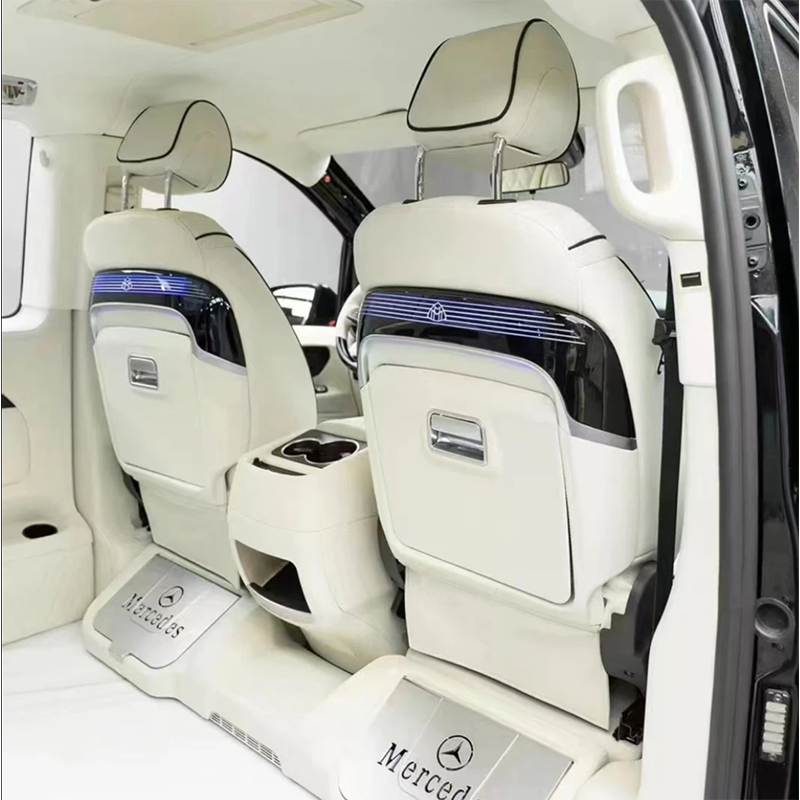
At the top end of the MPV spectrum sit full-size minivans — vehicles with seating for seven to nine passengers, sliding side doors on both sides, and van-derived platforms that prioritise maximum interior volume. These are less common in European markets but dominant in North American family vehicle sales. Their greater size brings proportionally higher running costs but also unmatched passenger accommodation, with full adult-sized seating across all three rows being achievable in a way that is structurally difficult for car-based MPV platforms to replicate.
| MPV Type | Typical Seating | Typical Length | Best Suited To |
|---|---|---|---|
| Compact MPV | 5 | 4.0 – 4.4 m | Small families, urban use |
| Large MPV / People Carrier | 6 – 7 | 4.6 – 5.0 m | Families with 2+ children, regular long trips |
| Full-Size Minivan | 7 – 9 | 5.0 – 5.4 m | Large families, maximum passenger capacity |
Seven-seat MPVs are the most popular configuration within the large MPV segment, and the quality of the seven-seat experience varies enormously between models. Evaluating a 7 seater MPV requires looking beyond the headline seat count to assess whether those seven seats are genuinely usable for real passengers — particularly adults — in all three rows.
The third row is where many seven-seat vehicles fall short. A generous wheelbase — ideally above 2,900 mm — is necessary to provide adequate legroom in row three after accommodating comfortable second-row occupants. Third-row legroom of 750 mm or above is considered adequate for occasional adult use; below 650 mm, the third row is realistically only suited to children under ten years of age.
Access to the third row is equally important. Tip-and-slide second-row seats that move forward automatically when the access lever is pulled make entry and exit significantly easier, particularly for elderly passengers or those with limited mobility. Some MPVs offer a dedicated walk-through aisle between second-row seats, eliminating the need to move any seat at all — a feature that makes the vehicle considerably more practical for daily family use.
The second row in a seven-seat MPV is typically configured as either a three-seat bench or two individual captain's chairs. Captain's chairs improve comfort and access for second-row occupants and create a natural aisle to the third row, but reduce total seating to six and eliminate the middle seat position. Bench seats retain the seventh seat and often allow the row to slide fore and aft to balance legroom between rows two and three depending on who is travelling — a genuinely useful feature when the third row carries adults on one journey and is folded flat to expand boot space on the next.
One of the most important and frequently misrepresented specifications in 7 seater MPV reviews is boot volume with all seven seats occupied. When all rows are in use, boot space in most seven-seat MPVs ranges from as little as 100 litres to approximately 400 litres in better-designed models. 100 litres is insufficient for anything beyond a few soft bags — realistically, a family travelling with seven people needs at least 250 litres of boot space to accommodate luggage for all passengers on a typical trip. Always check this specific figure rather than relying on the maximum boot volume quoted with rear seats folded.
Sliding rear doors are one of the most underappreciated practical features of a purpose-built MPV. Unlike conventional hinged rear doors that require a clear arc of space to swing open — presenting a challenge in tight car park bays — sliding doors open parallel to the vehicle body, allowing full-width passenger access even when parked close to an adjacent vehicle. For parents loading young children into child seats, or for passengers stepping out directly onto a pavement, this difference is significant in daily use. Power sliding doors — now available on many mid-range and premium MPVs — operate at the touch of a button and can be programmed to open and close with the key fob, a feature that proves genuinely useful when carrying shopping or managing young children.
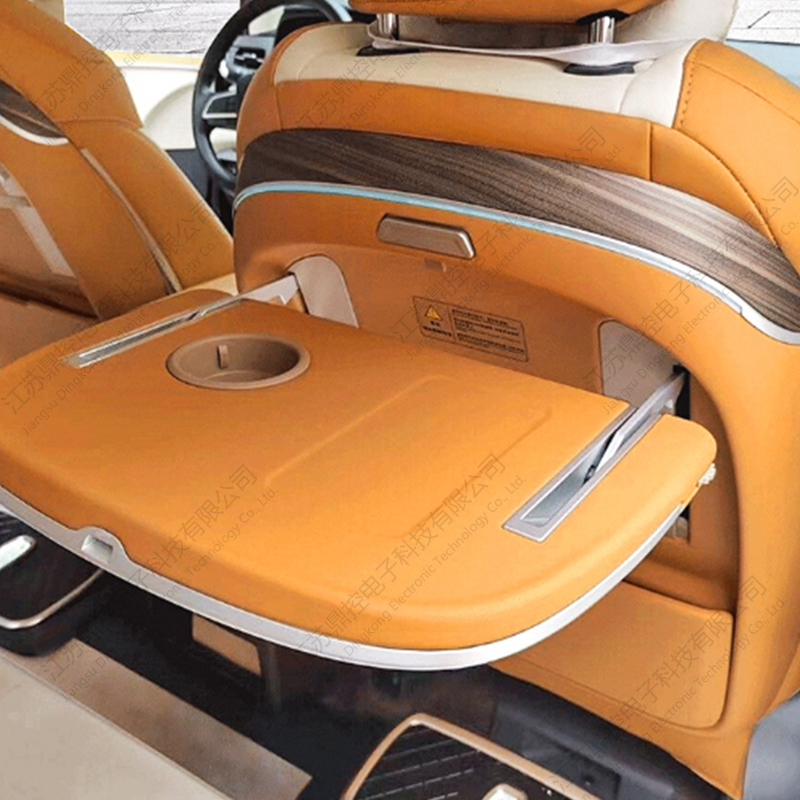
The rise of the SUV has significantly eroded MPV sales over the past decade, as buyers have favoured the higher driving position, more assertive styling, and perceived prestige of the SUV body style over the more utilitarian MPV. However, when evaluated purely on the criteria that matter to families — interior space, third-row usability, ease of entry, and flexibility — the purpose-built MPV consistently outperforms similarly priced seven-seat SUVs.
Conventional petrol and diesel engines remain the most widely available powertrain options in the MPV segment. Diesel engines continue to make practical sense for high-mileage families — typically those covering above 15,000 miles per year — due to their superior fuel economy on motorway journeys, which is the typical use pattern for a loaded seven-seat family vehicle. A turbocharged diesel engine in a large MPV commonly returns 45–55 mpg on a long motorway run, compared to 35–42 mpg for an equivalent petrol unit.
Petrol engines are better suited to lower-mileage use and urban driving cycles, and carry lower purchase prices in most markets. The gap in real-world fuel costs between diesel and petrol narrows significantly for families covering below 12,000 miles annually, at which point the lower purchase price of a petrol variant often makes it the more economical long-term choice.
The hybrid MPV segment has grown substantially in recent years. Full hybrid systems — which combine a petrol engine with an electric motor and self-charging battery — deliver particularly strong fuel economy in urban and suburban driving, where regenerative braking and electric-only low-speed running reduce fuel consumption significantly. Families who spend a high proportion of their mileage in congested urban conditions can achieve real-world fuel economy of 45–55 mpg from a full hybrid MPV, making it competitive with diesel across all driving patterns.
Plug-in hybrid MPVs add a larger battery that can be charged from an external power source, providing an electric-only range of typically 30–50 miles. For families with a home charging point whose daily mileage falls within the electric range, a plug-in hybrid MPV can deliver running costs approaching those of a pure electric vehicle for the majority of journeys, while retaining full range capability for longer trips without range anxiety.
The electric MPV segment is expanding, with several manufacturers bringing purpose-designed electric people carriers to market. Electric MPVs combine zero tailpipe emissions with the interior space advantages of the MPV body style, and the low centre of gravity afforded by floor-mounted battery packs can improve handling dynamics compared to conventional MPVs. Range on current electric MPV models varies between approximately 200 and 350 miles, which is adequate for the majority of family use cases but requires more careful planning on very long road trips than a conventional ICE or hybrid equivalent.
Given that MPVs are predominantly purchased as family vehicles carrying children, safety specification deserves particular attention during the buying process. Modern MPVs routinely achieve five-star Euro NCAP ratings, but the level of active safety technology included as standard — rather than as a paid option — varies considerably between models and trim levels.
MPVs have a reputation in some markets for high running costs, but this perception often reflects unfair comparisons with smaller vehicles rather than the true cost of ownership against equivalently capable alternatives. Compared to a seven-seat SUV of similar quality and specification, a large MPV typically offers lower purchase price, better fuel economy, lower insurance grouping, and comparable servicing costs — making it the more economical choice for genuine seven-seat use across most ownership scenarios.
Depreciation is the area where MPVs have historically underperformed relative to SUVs. The reduced aspirational appeal of the MPV body style in consumer perception translates to faster value erosion on the used market in many European countries. For buyers purchasing new or near-new, this represents a genuine financial consideration. However, for buyers purchasing used — which accounts for the majority of MPV transactions — the same depreciation curve that penalises new buyers creates strong value for money on the used market, where a three-year-old large MPV with low mileage can frequently be acquired for 40–50% of its original list price.
Before committing to a specific model, the following questions will help identify whether the vehicle genuinely meets your household's requirements rather than simply meeting the headline seven-seat specification:
1: Introduction – Enhancing Comfort and Convenience with Car Armrests The Importance of Comfort in Modern Driving In today’s automotive landscape,...
READ MOREI. IntroductionThe automotive industry is undergoing constant evolution, with a growing emphasis on vehicle maintenance and personalization. For car o...
READ MORE1. Introduction The Tesla Model 3 and Model Y have quickly become two of the most popular electric vehicles on the market. With their sleek designs, i...
READ MORE
Jiangsu Dingkong, No.1, Menlouxia, Changjing Town, Jiangyin City, Jiangsu Province, China
Copyright © 2024 Jiangsu Dingkong Electronic Technology Co., Ltd. All Rights
Reserved.
 Auto Aftermarket Accessories Manufacturers