

 English
 中文简体
中文简体1: Introduction – Enhancing Comfort and Convenience with Car Armrests The Importance of Comfort in Modern Driving In today’s automotive landscape,...
READ MOREApr 09, 2026
Content
Hybrid auto technology combines two distinct power sources — a conventional internal combustion engine (ICE) and one or more electric motors powered by a rechargeable battery pack — to move a vehicle more efficiently than either source could alone. The principle is straightforward: use each power source at the moment it operates most efficiently, and recover energy that conventional vehicles waste entirely.
In a traditional gasoline car, fuel energy lost as heat during braking is gone permanently. In a hybrid, that kinetic energy is captured by the electric motor operating in reverse as a generator — a process called regenerative braking — and stored in the battery for later use. This single feature alone accounts for a significant portion of the fuel efficiency advantage hybrids demonstrate in city driving, where frequent deceleration events would otherwise represent pure energy waste.
The Toyota Prius, launched in Japan in 1997 and globally from 2000, was the first mass-produced hybrid vehicle. Its commercial success demonstrated that hybrid technology could be practical and widely adopted, not just technically impressive. In the decades since, virtually every major automaker has developed hybrid variants across their model ranges — from compact city cars to full-size trucks and luxury SUVs.
Not all hybrids work the same way. Understanding the three primary hybrid architectures helps clarify what to expect from each category in real-world driving.
Mild Hybrids (MHEV) are the most basic form. A small electric motor-generator assists the combustion engine — reducing load during acceleration and enabling the engine to shut off at idle — but cannot propel the vehicle on electricity alone. Mild hybrids cost less than full hybrids and offer modest fuel savings, typically in the range of 10–15% compared to a non-hybrid equivalent. They are increasingly used as a cost-effective base layer of electrification across mainstream model ranges.
Full Hybrids (HEV) carry a larger battery and a more powerful electric motor capable of driving the vehicle at low speeds and during light acceleration without the combustion engine running at all. The engine starts automatically when demand increases or the battery charge falls below a set threshold. The power control unit — a sophisticated onboard computer — continuously calculates the optimal split between electric and combustion power based on speed, acceleration demand, battery state of charge, and engine efficiency. Real-world fuel economy of 45–55 MPG is achievable in the best full hybrid models in mixed urban and highway driving.
Plug-in Hybrids (PHEV) feature substantially larger battery packs, typically ranging from 10 to 25 kWh, enabling electric-only driving ranges of 20 to 50 miles before the combustion engine engages. Unlike standard hybrids, PHEVs can be charged from an external power source — a home outlet, workplace charger, or public charging station — allowing drivers with predictable daily commutes to cover most or all of their routine distance on electricity alone. For drivers who charge regularly, a PHEV can deliver extremely low fuel costs while retaining the full range capability of a conventional vehicle for longer journeys.
| Type | Electric-Only Drive | Plug-In Charging | Typical Fuel Saving vs. ICE | Example Models |
|---|---|---|---|---|
| Mild Hybrid (MHEV) | No | No | 10–15% | Ford EcoBoost MHEV, Suzuki Swift |
| Full Hybrid (HEV) | Yes (low speed) | No | 25–40% | Toyota Prius, Honda Accord Hybrid |
| Plug-in Hybrid (PHEV) | Yes (20–50 miles) | Yes | Up to 60%+ | Toyota RAV4 Prime, Honda CR-V PHEV |
When you start a full hybrid and pull away from a standstill, the vehicle typically moves on electric power alone — quietly and without combustion. As you accelerate more firmly or reach higher speeds where the electric motor's efficiency advantage diminishes, the combustion engine starts seamlessly and contributes propulsion. In a parallel hybrid system (the most common design), both the engine and electric motor can drive the wheels simultaneously or independently, depending on what the power management system determines is most efficient at any given moment.
The power control unit — sometimes called the hybrid control module — is the intelligence at the center of the system. It monitors battery state of charge, vehicle speed, throttle position, road gradient, and dozens of other variables many times per second, deciding in real time whether to draw from the battery, charge it via the engine, capture regenerative braking energy, or some combination of all three. This seamless management is what makes modern hybrids feel no different to drive than a conventional automatic vehicle, despite the complexity operating beneath the surface.
From an ownership perspective, hybrids require less brake maintenance than conventional vehicles because regenerative braking handles most deceleration, reducing friction brake wear significantly. The combustion engine also benefits from operating closer to its peak efficiency range more often, which can extend service intervals in some systems. Battery longevity has proven to be a non-issue in practice: hybrid battery packs from the earliest Prius generations have routinely outlasted the rest of the vehicles around them, and most manufacturers now offer 8–10 year battery warranties as standard.
Once you have decided on a powertrain — hybrid or otherwise — one of the most practical decisions in choosing a passenger car is the body style. The difference between a hatchback and a sedan is architectural: it determines how the car is structured, how cargo is stored, and what kind of everyday flexibility the vehicle offers.
A sedan is built on what automotive engineers call a three-box body. The first box houses the engine, the second is the passenger cabin, and the third is a separate, fully enclosed trunk. The trunk in a sedan is a walled-off compartment accessible through a rear lid that opens roughly halfway down the rear of the car. This separation means the cargo area is physically isolated from the passenger space — an arrangement that provides good noise insulation, greater cargo privacy, and a classic exterior profile that remains the benchmark of formal automotive design.
A hatchback uses a two-box body. The engine occupies the front box, while the second and larger box combines the passenger cabin and the cargo area into a single connected space. The rear opens via a tailgate or hatch hinged at the roofline, swinging upward to reveal an unobstructed loading area that flows directly from the rear seats. This design is the defining characteristic of the hatchback — and the source of both its primary advantage and its main limitation.
The cargo space difference between hatchbacks and sedans is significant and measurable. A well-known example: the Honda Civic hatchback offers approximately 24.5 cubic feet of cargo space behind the rear seats, while the Honda Civic sedan's trunk delivers around 14.8 cubic feet. That is a difference of nearly 10 cubic feet — meaningful when you are trying to fit a bicycle, a flat-pack piece of furniture, or a large pet crate.
Beyond raw volume, the hatchback's cargo area shape provides a practical advantage. Because the cargo floor is flush with the rear bumper and the opening is wide, loading and unloading bulky or oddly shaped items is far easier than working through the narrower aperture of a sedan trunk. Most hatchbacks also offer folding rear seats that create a flat, extended load area — transforming a five-seat passenger car into a compact cargo hauler when needed.
Sedans, while less flexible for large items, offer a meaningful advantage in cargo security and privacy. The enclosed trunk keeps belongings completely hidden from outside view and physically separated from the cabin. For urban drivers who routinely leave bags or equipment in a parked car, this is a genuine safety consideration. Some sedans also offer a pass-through opening when rear seats are folded, allowing longer items like skis or lumber to extend into the cabin — narrowing the gap with hatchbacks in specific scenarios, though not eliminating it.
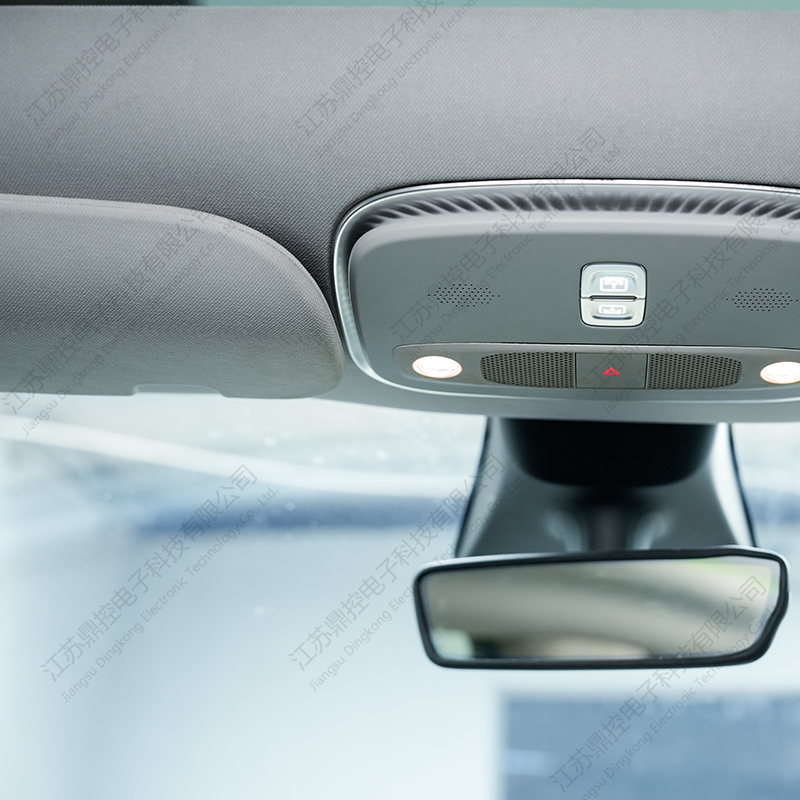
Sedans generally provide a quieter cabin experience than equivalent hatchbacks. Because the trunk forms a physical barrier between the cargo area and the passenger compartment — and because it sits above the rear axle where road noise is most prominent — sedans benefit from an additional layer of acoustic insulation. At highway speeds, this difference is perceptible, particularly in longer journeys where cabin noise fatigue becomes a factor.
Hatchbacks compensate with better rear headroom. The roofline in a hatchback extends further rearward before sloping, giving rear-seat passengers more vertical space than the equivalent position in most sedans. This makes hatchbacks a more comfortable choice for taller rear passengers on shorter trips, even if the overall legroom advantage in longer cars typically belongs to the sedan.
In terms of driving dynamics, hatchbacks tend to be slightly shorter in overall length than their sedan counterparts, which improves maneuverability in tight urban environments and makes parallel parking measurably easier. The compact footprint is a genuine daily-use advantage for city drivers who navigate narrow streets and compete for parking. Sedans, with their longer wheelbase, typically offer greater high-speed stability and a smoother ride on open roads — characteristics that favor highway and long-distance driving profiles.
One of the most practical aspects of the modern automotive market is that hybrid technology and body style are not mutually exclusive choices — many of the most popular hybrid models are available in both sedan and hatchback configurations, allowing buyers to optimize for powertrain efficiency and body style simultaneously.
The Toyota Corolla, for instance, offers its hybrid drivetrain in both sedan and hatchback variants. The Hyundai Ioniq and the Toyota Prius have historically been hatchbacks by default, pairing fuel-efficient hybrid technology with versatile cargo access. The Honda Accord Hybrid is a sedan, delivering 48 MPG combined in a refined, spacious three-box body. This cross-pollination means the question of "hybrid or not" and the question of "hatchback or sedan" can be answered independently based on your priorities.
For urban drivers, a hybrid hatchback represents a particularly compelling combination: the fuel efficiency advantage of hybrid technology is most pronounced in stop-and-go city driving — precisely the environment where regenerative braking captures the most energy — and the hatchback body style suits the practical, flexible cargo needs of city life. For drivers who spend more time on highways and longer routes, a hybrid sedan may be the better fit, balancing the moderate fuel savings available at steady highway speeds with the comfort, quietness, and cargo privacy that a three-box body provides.
Ultimately, choosing between these options comes down to understanding your actual driving patterns, cargo requirements, and the length of your typical journeys. Both hybrid technology and the hatchback format were developed to solve real problems — one reducing fuel consumption and emissions, the other maximizing everyday practicality within a compact footprint. Together or separately, they represent two of the most enduring and well-validated innovations in mainstream automotive design.
1: Introduction – Enhancing Comfort and Convenience with Car Armrests The Importance of Comfort in Modern Driving In today’s automotive landscape,...
READ MOREI. IntroductionThe automotive industry is undergoing constant evolution, with a growing emphasis on vehicle maintenance and personalization. For car o...
READ MORE1. Introduction The Tesla Model 3 and Model Y have quickly become two of the most popular electric vehicles on the market. With their sleek designs, i...
READ MORE
Jiangsu Dingkong, No.1, Menlouxia, Changjing Town, Jiangyin City, Jiangsu Province, China
Copyright © 2024 Jiangsu Dingkong Electronic Technology Co., Ltd. All Rights
Reserved.
 Auto Aftermarket Accessories Manufacturers