

 English
 中文简体
中文简体1: Introduction – Enhancing Comfort and Convenience with Car Armrests The Importance of Comfort in Modern Driving In today’s automotive landscape,...
READ MOREMar 25, 2026
Content
An MPV — short for Multi-Purpose Vehicle — is a type of car engineered specifically to maximize interior space, passenger capacity, and everyday versatility. Unlike a conventional sedan or even an SUV, an MPV places practicality at the center of its design: flexible seating layouts, wide-opening doors, and generous cargo room are its defining traits.
MPVs are sometimes called people carriers or minivans, though modern models have evolved well beyond the boxy, utilitarian image of earlier decades. Today's MPVs blend the spaciousness of a people carrier with technology and driving refinement that rival premium family cars. They typically seat between 5 and 8 passengers across two or three rows, making them the go-to choice for larger families, frequent road-trippers, and anyone who regularly transports more than four people.
At their core, MPVs exist to solve a simple problem: fitting the whole family — along with luggage, strollers, sports gear, and the occasional flat-pack furniture run — into a single, comfortable vehicle without compromise.
Many buyers confuse MPVs with SUVs or minivans. While the boundaries have blurred in recent years, the distinctions matter when choosing the right vehicle for your family.
| Feature | MPV | SUV | Minivan |
|---|---|---|---|
| Typical Seating | 7–8 passengers | 5–7 passengers | 7–8 passengers |
| Sliding Doors | Common | Rare | Standard |
| Off-Road Capability | Limited | Strong | Limited |
| Interior Flexibility | Excellent | Moderate | Excellent |
| Running Costs | Low–Moderate | Moderate–High | Low–Moderate |
The key takeaway: if maximum interior space, easy child access, and low running costs are your priorities, an MPV consistently outperforms an SUV of the same price point. SUVs win on road presence and off-road capability, but families who drive primarily on urban and motorway routes rarely need those advantages.
Not all MPVs are created equal. When shopping for a family vehicle, these are the features that make the biggest real-world difference — ranked by how directly they affect daily family life.
Power sliding doors are arguably the single most useful feature on any family MPV. They allow children to enter and exit safely in tight car park spaces, prevent door-dinging neighboring vehicles, and make loading car seats dramatically easier. Once you have lived with sliding doors, conventional hinged rear doors feel like a step backwards. Look for models with hands-free or power-operated sliding doors for even greater convenience during school runs and grocery trips.
A genuinely family-friendly MPV should allow you to reconfigure the cabin in minutes — not hours. Prioritize models where the second and third rows fold flat into the floor, creating a level load bay for large items. Swivel captain's chairs in the second row, available in around 60% of premium MPV models, allow adults to face children in the rear — a practical touch on long journeys. The ability to remove or stow individual seats independently gives families the flexibility to carry both passengers and bulky cargo on the same trip.
Modern MPVs come loaded with driver assistance technology that directly protects families. The features to prioritize include:
Many of these systems are now standard on mid-range trim levels, so they should not require a premium upgrade to access.
Long motorway journeys with children are significantly more manageable with dedicated rear-seat screens. Dual rear entertainment displays, now standard or optional on many flagship MPVs, allow passengers in the second row to watch different content independently. Equally important is the availability of multiple USB-C charging ports throughout all three rows — a genuine necessity in families where every passenger carries a device. Apple CarPlay and Android Auto integration on the main infotainment screen should be considered non-negotiable on any new MPV purchase.
A single-zone climate system is rarely sufficient for a vehicle carrying multiple passengers across different rows. Three-zone climate control — front, middle, and rear — allows passengers to independently regulate temperature, addressing the common complaint that rear-seat occupants feel either too hot or too cold while front occupants are comfortable. This feature is particularly valuable on MPVs used for school runs in variable weather.
With all seats in use, the boot must still accommodate everyday family luggage. Look for an MPV offering at least 500 litres of boot space with all rows occupied, expanding to 1,000 litres or more with the third row folded. Equally important are smaller storage details: deep door pockets that fit full-size water bottles, a large center console with lockable compartment, and under-seat storage drawers in the second row. These details separate genuinely family-engineered MPVs from those that merely offer large dimensions.
The MPV segment has embraced electrification at a pace that matches and, in some cases, leads the broader market. Hybrid and plug-in hybrid variants are now available across most major MPV lineups, with fully electric models also entering the segment. For families covering regular urban and suburban commutes, a plug-in hybrid MPV can dramatically reduce fuel costs while retaining the range confidence of a petrol engine for longer trips. Electric MPVs offer the added benefit of near-silent operation — a meaningful comfort advantage when carrying sleeping children.
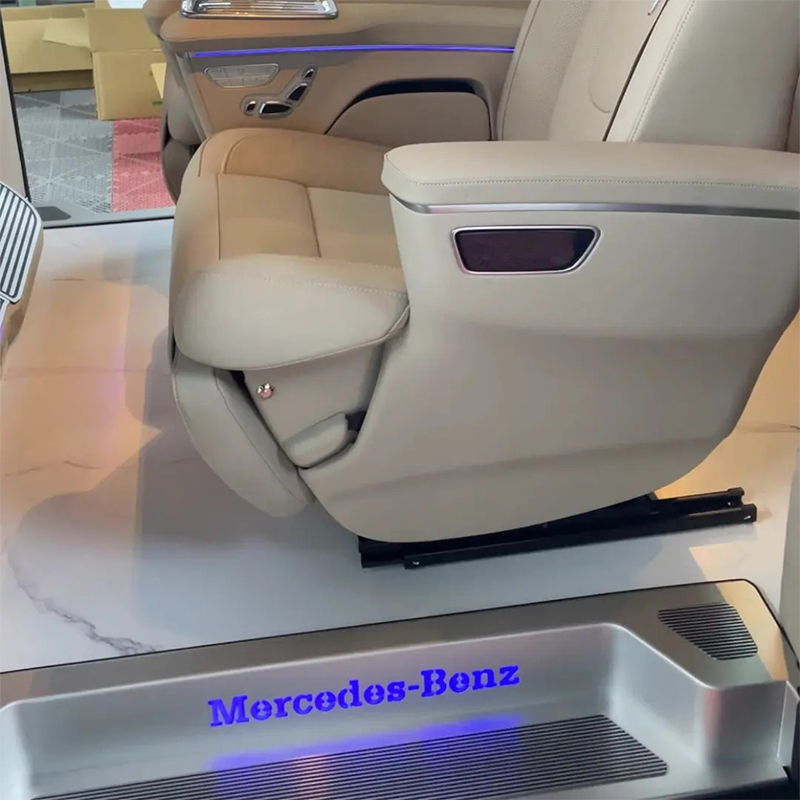
Seating configuration is the most consequential decision when choosing an MPV, and it is frequently misunderstood. The choice is not simply between five seats and seven seats — it involves trade-offs in rear legroom, boot space, and overall passenger comfort.
Five-seat MPVs offer the most generous second-row space and the largest permanent boot, making them ideal for families of four who prioritize comfort over raw capacity. Seven-seat models with a fixed third row sacrifice some boot depth but provide constant access to all seats. Models with fold-flat or removable third-row seats offer the best compromise — occasional extra capacity without permanently reducing cargo space.
A practical rule: if you regularly carry more than five people, choose a seven-seater with a proper third row where adults can sit comfortably. If you only occasionally need the extra seats, a five-seater with fold-up jump seats in the boot area is sufficient and gives you a more spacious everyday vehicle.
MPVs are generally straightforward to maintain, but a few practices specific to this vehicle type are worth following. Rotating tires every 8,000 km can extend tire life by up to 40%, particularly important given the higher curb weights of seven-seat MPVs. Sliding door tracks should be cleaned monthly to prevent debris build-up that causes stiff operation — a simple wipe-down with a damp cloth prevents the majority of sliding door issues. For plug-in hybrid models, keeping the battery charge between 20% and 80% on a regular basis helps preserve long-term battery health.
Interior durability matters as much as mechanical reliability for family buyers. Before purchasing, check independent owner reliability surveys for the specific model you are considering — real-world data on fault frequency and dealer repair times provides a far more accurate picture than manufacturer claims alone.
Despite the dominance of SUVs in new car sales charts, the MPV remains the most rational vehicle choice for families who prioritize usable interior space over image. For the same budget, an MPV consistently delivers more seat room, more cargo flexibility, and lower running costs than a comparable SUV. The practical advantages — sliding doors, flat-folding seats, low load floors — address real daily challenges that SUVs with their high sills and conventional doors simply cannot match as efficiently.
The 2025 and 2026 model year has brought a new generation of MPVs that are genuinely desirable vehicles, not just practical ones. From premium compact options that feel like driving a quality executive car, to large electric people carriers with striking design and long range, the MPV segment in 2026 offers compelling choices across every budget. If your family's primary need is comfortable, practical transportation for more than four people, an MPV remains the most sensible and cost-effective answer on the market.
1: Introduction – Enhancing Comfort and Convenience with Car Armrests The Importance of Comfort in Modern Driving In today’s automotive landscape,...
READ MOREI. IntroductionThe automotive industry is undergoing constant evolution, with a growing emphasis on vehicle maintenance and personalization. For car o...
READ MORE1. Introduction The Tesla Model 3 and Model Y have quickly become two of the most popular electric vehicles on the market. With their sleek designs, i...
READ MORE
Jiangsu Dingkong, No.1, Menlouxia, Changjing Town, Jiangyin City, Jiangsu Province, China
Copyright © 2024 Jiangsu Dingkong Electronic Technology Co., Ltd. All Rights
Reserved.
 Auto Aftermarket Accessories Manufacturers