

 English
 中文简体
中文简体1: Introduction – Enhancing Comfort and Convenience with Car Armrests The Importance of Comfort in Modern Driving In today’s automotive landscape,...
READ MOREMay 07, 2026
Toyota's MPV lineup is one of the most diverse in the automotive world — spanning entry-level city minivans, rugged seven-seat workhorses, and six-figure luxury people movers. For workshop owners, fleet operators, and parts procurement teams, navigating this range can be genuinely confusing: a "Toyota MPV" could refer to a sub-compact Sienta used for urban school runs in Japan, a body-on-frame Innova serving as a commercial taxi in Southeast Asia, or an Alphard chauffeur vehicle in a premium corporate fleet. Each represents an entirely different parts ecosystem, with different engine families, suspension architectures, and service intervals. This guide covers every current and major discontinued Toyota MPV model — organized by segment — with the generation timelines and technical markers needed to accurately identify any vehicle in the range for service, repair, or parts sourcing purposes.
Content
MPV stands for Multi-Purpose Vehicle — a broad category that encompasses any passenger vehicle designed to prioritize interior space, passenger capacity, and flexibility over driving dynamics. In practice, Toyota's MPV lineup divides into three size segments, each targeting a different buyer profile and geographic market.
Compact MPVs are sub-4.5-meter vehicles designed for urban and suburban family use, typically offering five to seven seats on a car-derived platform. They prioritize fuel efficiency, maneuverability, and low purchase cost. Toyota's compact MPV range includes the Sienta, Avanza, Calya, and Veloz.
Mid-size MPVs range from 4.5 to 4.9 meters and are designed for larger families, commercial passenger transport, and fleet use. They offer seven to eight seats, more robust powertrains, and greater cargo capacity. Toyota's mid-size range includes the Innova (sold as Kijang Innova in Indonesia), Noah, and Voxy.
Large and luxury MPVs exceed 4.9 meters and are positioned at the premium end of the people-carrier market. They offer executive-level cabin appointments, advanced noise insulation, and features such as power sliding doors, individual rear captain seats, and rear entertainment systems. Toyota's large MPV range is led by the Alphard and Vellfire, with the Granvia serving as a premium van-based alternative.
The Sienta is Toyota's compact JDM-origin MPV, built on a car platform and designed for maximum interior versatility within a sub-4.3-meter footprint. First introduced in Japan in 2003, the Sienta entered its first major generation (XP80) from 2003 to 2015, followed by the XP170 generation from 2015 to 2022, and the current third-generation XP210 from 2022 onward — the first Sienta offered with a hybrid powertrain as standard in most markets. Seating configurations vary by market: Japanese domestic models offer a 6-seat or 7-seat layout with sliding rear doors; export versions in Southeast Asia and Hong Kong are typically 7-seat. Engine options across generations have included the 1NZ-FE (1.5L), 2NR-FE (1.5L), and the 1.5L M15A-FXE hybrid unit in the current generation. The Sienta is sold in Japan, Singapore, Hong Kong, Taiwan, Indonesia, Malaysia, and several other Asian markets, but has never been offered in North America or Europe.
The Avanza is an entry-level MPV developed jointly by Toyota and Daihatsu, manufactured in Indonesia and sold primarily across Southeast Asia, the Middle East, and Africa. It competes in the low-cost seven-seat segment and uses a body-on-frame construction uncommon in its size class, which contributes to its durability in less developed road conditions. The first generation (F601/F602) ran from 2003 to 2011 with 1.3L and 1.5L VVT-i engines. The second generation (F650/F651) ran from 2011 to 2021. The third generation, launched in 2021, moved to a monocoque platform shared with the Daihatsu Xenia, adopting a more contemporary design and updated 1.3L and 1.5L naturally aspirated engines. The Avanza is available in 7-seat configuration across all generations and is one of the best-selling MPVs across Indonesia, Thailand, the Philippines, and several African markets.
The Calya is a budget-tier compact MPV sold exclusively in Indonesia, developed in partnership with Daihatsu (where it is sold as the Sigra). Launched in 2016, it is powered by a 1.2L 3NR-VE engine and offers seating for up to seven passengers in an entry-level configuration at a lower price point than the Avanza. The Calya sits below the Avanza in Toyota's Indonesian product hierarchy and targets first-time MPV buyers and ride-hailing operators. A facelift was introduced in 2021 with minor exterior and interior revisions. Parts compatibility between the Calya and its Daihatsu Sigra sibling is high, which benefits aftermarket availability in the Indonesian market.
The Veloz was initially offered as a premium variant of the Avanza before being repositioned as a separate, higher-spec compact MPV with the third-generation Avanza launch in 2021. The current Veloz shares its monocoque platform with the new Avanza but features a sportier exterior design, a more premium interior, and is offered exclusively with the 1.5L naturally aspirated engine. It is positioned as the step-up choice for buyers who want Avanza-class functionality with a more assertive appearance. The Veloz is sold in Indonesia, Thailand, and select other Southeast Asian markets.
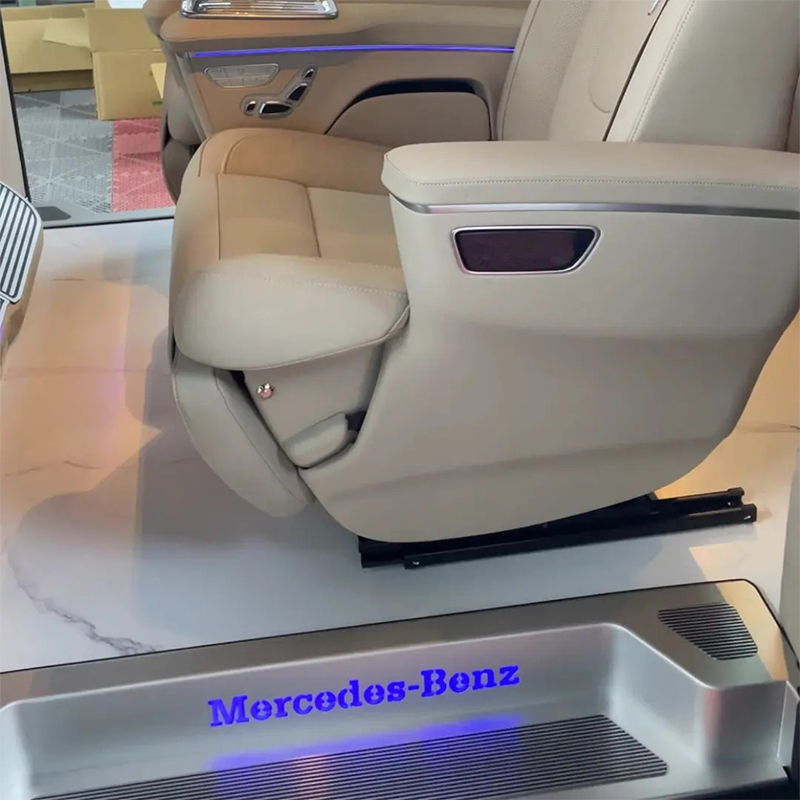
The Innova is Toyota's most commercially significant mid-size MPV globally, particularly dominant across Southeast Asia, South Asia, and the Middle East. It replaced the long-running Kijang nameplate in Indonesia and launched in 2004 as the first generation (AN10/AN20) built on the IMV (Innovative International Multipurpose Vehicle) platform — a ladder-frame, rear-wheel-drive architecture shared with the Fortuner and Hilux. This body-on-frame construction gives the Innova durability well beyond what a monocoque platform of similar dimensions could offer, which is why it became the default choice for taxi and minibus operators across its key markets.
The first generation (2004–2015) was powered by the 2TR-FE (2.0L petrol) and 2KD-FTV (2.5L diesel) engines. The second generation Innova Crysta (2015–2023) upgraded to the 2GD-FTV (2.4L diesel) and retained the 2TR-FE petrol option, adding a 2.8L 1GD-FTV diesel for select markets. The third generation, the Innova Zenix (2022–present), represents a significant departure: it moves to a monocoque front-wheel-drive platform and adds a 2.0L hybrid powertrain alongside the conventional 2.0L petrol — a shift that has divided opinion among buyers who valued the original's body-on-frame robustness. The Innova is sold across Indonesia, India, Thailand, the Philippines, Vietnam, Pakistan, South Africa, and several Middle Eastern markets.
The Noah is a JDM-focused mid-size MPV sold in Japan since 1998, sharing its platform with the Voxy and (until 2022) the Esquire. It is built on Toyota's FF (front-engine, front-wheel-drive) platform and offers sliding rear doors, a 7 or 8-seat interior, and a broad range of engine options including hybrid powertrains from the second generation onward. The current fourth generation (R90 series, launched 2022) is available exclusively as a hybrid in Japan, powered by the 1.8L 2ZR-FXE system. The Noah is rarely found outside Japan and a small number of grey-import markets. Its spare parts ecosystem is primarily supplied through the JDM aftermarket channel.
The Voxy is the sportier, more aggressive-styled sibling of the Noah, sharing its platform, powertrains, and dimensions while offering a distinctly different exterior character aimed at younger buyers. Like the Noah, it has been sold exclusively in Japan since 2001 and entered its current fourth generation in 2022 alongside the Noah refresh. Both models share approximately 80% of their mechanical components, making cross-compatibility in parts sourcing straightforward. The Voxy is available in 7-seat and 8-seat configurations. The fourth-generation model is available as a standard hybrid and a plug-in hybrid (PHEV) variant — a first for the nameplate.
| Model | Current Generation | Seating | Drive Layout | Key Markets |
|---|---|---|---|---|
| Innova Zenix | 3rd gen (2022–) | 7 seats | FWD / 4WD | SE Asia, India, Middle East |
| Innova Crysta | 2nd gen (2015–) | 7–8 seats | RWD / 4WD | India, Africa (continued) |
| Noah | 4th gen (2022–) | 7–8 seats | FWD / E-Four | Japan |
| Voxy | 4th gen (2022–) | 7–8 seats | FWD / E-Four | Japan |
The Alphard is Toyota's flagship MPV and one of the most recognizable luxury people-carriers in the Asia-Pacific region. Launched in 2002, it is built on a front-wheel-drive monocoque platform and positioned as an executive transport vehicle, with a cabin that emphasizes rear passenger comfort over front-row dynamics. The first generation (H10, 2002–2008) established the model's premium positioning. The second generation (H20, 2008–2015) refined the design and expanded powertrain options. The third generation (H30, 2015–2023) brought the model to international prominence, particularly in China, Hong Kong, Singapore, and Australia, where its combination of sliding doors, spacious rear cabin, and premium features made it a preferred choice for corporate and VIP transport. The current fourth generation (H40, launched 2023) adopts an even more assertive exterior design and offers a 2.5L hybrid powertrain as the primary option in most markets, alongside a 3.5L V6 petrol for select markets. Standard equipment on higher grades includes power sliding doors, individual rear captain seats with ottoman function, dual rear-seat monitors, and Toyota's Safety Sense 3.0 suite. The Alphard is sold across Japan, China, Hong Kong, Taiwan, Australia, Singapore, Malaysia, Thailand, and several Middle Eastern markets.
The Vellfire is a sportier, more assertive-styled sibling of the Alphard, sharing the same platform, powertrains, and fundamental cabin architecture while offering a distinctly different exterior character. It launched alongside the second-generation Alphard in 2008 and has been produced in parallel through each subsequent generation. In the Japanese domestic market, the Alphard and Vellfire are sold through different dealer channels — Alphard through Toyota dealers, Vellfire through Toyopet. For export markets, both models are frequently available through the same dealer network. The current fourth-generation Vellfire (2023–present) has been repositioned as an even more premium offering in some markets, with exclusive trim levels not shared with the Alphard. Mechanically, the two models are interchangeable for the vast majority of replacement parts.
The Granvia is Toyota's premium van-based MPV, built on the HiAce commercial van platform but configured with upscale passenger cabin appointments. Launched in 2019 as a successor to the HiAce Commuter in premium-transport roles, it offers seating for up to six passengers in a business-class configuration, or up to ten in higher-density layouts for shuttle and tour operator use. The Granvia is powered by a 2.8L 1GD-FTV diesel engine across most markets, with a petrol option in select regions. Its high roof profile and van-derived architecture make it particularly well suited for markets where ceiling height and headroom are valued — including Australia, New Zealand, the Middle East, and Southeast Asia. It is not offered in Japan (where the HiAce Wagon fills this role) or North America.
Several Toyota MPV nameplates have been discontinued but remain in active service across global markets — and therefore continue to generate significant demand for replacement parts.
The Previa (sold as Estima in Japan and parts of Asia) was Toyota's flagship large MPV for nearly three decades. Its most distinctive feature in its first generation (1990–2000) was a mid-ship-mounted engine layout — the 2TZ-FE 2.4L engine was positioned almost horizontally beneath the floor between the front and rear axles, a configuration unique in the MPV segment. Subsequent generations (2000–2006 and 2006–2019) moved to a conventional front-engine layout. The Estima Hybrid, introduced in 2001, was one of the world's first hybrid MPVs. Production ended in 2019. The Previa/Estima remains common in used car markets across Japan, Australia, the Middle East, and parts of Africa, where parts availability is an ongoing requirement.
The Wish was a compact five-door MPV sold in Japan and several Asian markets as a more affordable alternative to the larger Noah and Voxy. Two generations were produced: the first (AE10/ZE10/ANE10, 2003–2009) and the second (AE20/ZE20/ZGE20, 2009–2017). The Wish used a low, wide body style more reminiscent of a station wagon than a traditional MPV and was positioned as a lifestyle-oriented vehicle for smaller families. It remains a popular used-car choice in Taiwan, Singapore, Thailand, and among Japanese grey imports globally.
In the Australian market, the Tarago nameplate was applied to the second and third-generation Estima, running from 2000 to 2019. It was the dominant large MPV in the Australian market for this period and retains a strong presence in the Australian used vehicle fleet. Many Tarago owners continue to require replacement parts for the 2AZ-FE (2.4L petrol) and 1MZ-FE / 2GR-FE (3.0L / 3.5L V6 petrol) engines fitted across different generations and grades.
The Picnic (sold as the Avensis Verso in some European markets) was Toyota's compact MPV offering for European buyers during the late 1990s and 2000s. It competed in the Renault Scenic and Citroën Xsara Picasso segment and offered seating for up to seven passengers. The model was discontinued after 2009 as European consumer preferences shifted toward crossovers and SUVs. It is still found in used vehicle markets across Europe, the Middle East, and parts of Africa.
Accurately identifying the specific model, generation, and variant of a Toyota MPV is essential for sourcing the correct replacement parts. Toyota produces multiple generations of the same nameplate with different engine codes, platform specifications, and component fitments — and in many cases, parts from one generation are not interchangeable with the next despite sharing the same name. Three identification methods are available.
The Vehicle Identification Number (VIN) is a 17-character alphanumeric code that uniquely identifies every vehicle. On Toyota MPVs, the VIN is located on a plate visible through the lower-left corner of the windshield from outside the vehicle, and also stamped on the firewall in the engine bay. The VIN encodes the manufacturer (world manufacturer identifier, characters 1–3), vehicle type and platform (characters 4–8), check digit (character 9), model year (character 10), plant of manufacture (character 11), and sequential production number (characters 12–17). For Toyota, character 10 encodes the model year using a standardized letter-number system: J = 2018, K = 2019, L = 2020, M = 2021, N = 2022, P = 2023, R = 2024. Cross-referencing the full VIN against Toyota's parts catalog — either through a dealer or a reputable online parts lookup system — returns the exact parts compatibility list for that specific vehicle.
Toyota affixes a compliance or specification plate to the driver's door jamb or B-pillar on all vehicles. This plate lists the model designation, paint code, trim code, engine displacement, transmission type, and gross vehicle weight rating (GVWR). For parts purposes, the engine code printed on this plate — for example, "2GD-FTV" for a diesel Innova Crysta — is more directly useful than the VIN for cross-referencing parts catalogs, as most aftermarket parts databases are indexed by engine code rather than full VIN.
On Toyota MPVs, an additional vehicle information plate is affixed to the engine bay, typically on the strut tower or firewall. This plate replicates key information from the door jamb plate and also includes the chassis number (which may differ from the VIN in some markets). The engine code is also stamped directly on the engine block: on inline-4 engines it is typically found on the front face of the block near the timing cover; on V6 engines it is on the lower front of the engine between the cylinder banks. Confirming the engine code directly from the block is the most reliable verification method when document plates are illegible, damaged, or missing.
Despite the significant differences between Toyota's MPV segments — from the compact Sienta to the flagship Alphard — the categories of parts that see the highest replacement frequency are consistent across the range. Understanding these patterns is useful for workshop inventory planning and for parts distributors servicing mixed Toyota fleets.
| Part Category | Compact MPV (Sienta, Avanza) | Mid-Size MPV (Innova, Noah) | Luxury MPV (Alphard, Vellfire) |
|---|---|---|---|
| Brake components | Front disc pads, rear drum shoes | Front and rear disc pads, rotors | Front and rear disc pads, rotors (larger dimensions) |
| Suspension | Strut assemblies, lower arm bushings | Shock absorbers, leaf spring bushings (RWD models) | Strut assemblies, stabilizer bar links |
| Drivetrain | CV axle shafts, wheel bearings | Propeller shaft (RWD), CV joints (FWD Zenix) | CV axle shafts, transfer case seals (4WD) |
| Engine consumables | Timing chain kit, water pump, thermostat | Diesel injectors, glow plugs, EGR valve | Timing chain, VVT-i actuators, hybrid battery |
| Sliding door components | Manual door rollers, handles | Door check straps, hinges | Power slide door motors, door rail assemblies |
| Cooling system | Radiator, coolant reservoir, hoses | Radiator (diesel models run hotter), intercooler hoses | Radiator, condenser, hybrid cooling pump |
For body-on-frame models — particularly the first and second generation Innova — front suspension components (including upper control arms, lower ball joints, and steering knuckles) experience higher replacement rates than on monocoque MPVs due to the ladder frame's greater transmission of road shock through the front axle. For hybrid models in the Alphard, Vellfire, Noah, and Voxy range, the high-voltage battery module and hybrid inverter cooling pump are service items that become increasingly relevant as vehicles pass the 100,000 km mark. Stocking these components or having established supplier access for them is a meaningful differentiator for workshops servicing higher-mileage Japanese-import fleets.
1: Introduction – Enhancing Comfort and Convenience with Car Armrests The Importance of Comfort in Modern Driving In today’s automotive landscape,...
READ MOREI. IntroductionThe automotive industry is undergoing constant evolution, with a growing emphasis on vehicle maintenance and personalization. For car o...
READ MORE1. Introduction The Tesla Model 3 and Model Y have quickly become two of the most popular electric vehicles on the market. With their sleek designs, i...
READ MORE
Jiangsu Dingkong, No.1, Menlouxia, Changjing Town, Jiangyin City, Jiangsu Province, China
Copyright © 2024 Jiangsu Dingkong Electronic Technology Co., Ltd. All Rights
Reserved.
 Auto Aftermarket Accessories Manufacturers