

 English
 中文简体
中文简体1: Introduction – Enhancing Comfort and Convenience with Car Armrests The Importance of Comfort in Modern Driving In today’s automotive landscape,...
READ MOREMay 20, 2026
Content
Slide the rear door open on a Toyota Sienna and you immediately understand what separates a true MPV from everything else. The space isn't borrowed from a truck chassis or squeezed out of an SUV crossover — it's the whole point. Multi-Purpose Vehicles are engineered from the ground up around one question: how do you move more people, more cargo, and more of life's complexity without making every drive a chore?
Toyota's answer has been consistent for decades. Their MPV lineup sits on car-based platforms, which keeps the ride smooth, the handling predictable, and the fuel economy genuinely impressive. Where a three-row SUV often treats the rearmost seats as an afterthought, Toyota MPVs are designed so a sixth or seventh passenger isn't riding sideways with their knees near their chin. That distinction matters more than most buyers realize until they've lived with both.
The term "MPV" is broader than "minivan," and Toyota uses the full range. From the hybrid-exclusive Sienna sold in North America to the premium Alphard commanding attention in Asian markets, and the workhorse Hiace that's quietly become a backbone of transportation fleets worldwide, each model represents a different interpretation of the same core idea: maximize what a vehicle can do for real people.
Toyota's current MPV range spans several distinct segments, and choosing the right one depends heavily on your market, use case, and passenger expectations.
Toyota Sienna is the flagship family hauler for North America, and since 2021 it has been sold exclusively as a hybrid. It seats up to eight, offers available all-wheel drive via a separate rear electric motor, and produces a combined 245 system horsepower. The interior is wide, configurable, and packed with convenience features that make it genuinely pleasant to live with daily. It's the most practical MPV Toyota makes for long-distance family use.
Toyota Alphard and Vellfire occupy the luxury end of the spectrum, particularly in Japan, Southeast Asia, and the Middle East. These are prestige MPVs — the kind where rear passengers are the priority, not an afterthought. Executive lounge seating, ottoman footrests, and premium sound systems make them popular choices for private transport and high-end fleet operators. The Alphard's exterior presence alone has made it something of a status symbol in several markets.
Toyota Hiace takes a different route entirely. Where the Sienna and Alphard are about personal comfort, the Hiace is about utility and durability. Available in multiple body lengths and configurations — from passenger van to cargo carrier — it has built a reputation for reliability in conditions that would retire lesser vehicles early. Charter services, airport shuttles, and commercial operators around the world rely on it for exactly that reason.
Toyota Voxy rounds out the lineup for the Japanese domestic market. It blends the practicality of a tall-body MPV with a more refined, modern design language. Hybrid versions return 15–17 km/L, making it a genuinely economical family car, and Toyota Safety Sense is standard across the range.
Fuel economy at this vehicle size used to mean compromise. The Sienna ended that conversation. Toyota's 2.5-liter four-cylinder hybrid system, paired with an electronically controlled CVT and two electric motors, delivers up to 36 MPG combined — a figure that would be remarkable in a compact sedan, let alone a vehicle that seats eight adults comfortably.
The system is self-charging, meaning it doesn't need to be plugged in. Energy is recovered under braking and light deceleration, topped back into the battery, and deployed seamlessly when the gasoline engine would otherwise be working inefficiently. The transition between electric and combustion power is almost imperceptible, and the drivetrain's Sport, Normal, and Eco modes let drivers tune the balance between responsiveness and efficiency depending on the day.
The available AWD configuration is particularly clever. Rather than adding a traditional mechanical driveshaft and transfer case, Toyota uses a separate electric motor to drive the rear axle. This keeps the system's weight penalty minimal, which is why the AWD Sienna still achieves an EPA-estimated 35 MPG combined — just one mile per gallon less than the FWD version. For families in regions with genuine winter weather, that trade-off is an easy one to make.
Beyond the cost savings at the pump, the reduced emissions profile is meaningful. A vehicle that carries seven people while achieving mid-30s fuel economy is doing considerably more environmental work per mile than most alternatives in this category.
Toyota's MPV interiors are engineered around how families actually use space, not how it looks in a brochure photo. The Sienna's power sliding doors can be triggered with a kicking motion when your hands are full — a detail that sounds minor until you're carrying groceries with a toddler on your hip. Seven USB ports spread across all three seating rows means no arguments about who gets to charge their device on a long drive.
The third-row seat design deserves particular mention. The 60/40 One-Motion-Stow Split & Stow 3rd Row system folds flat into the floor at the pull of a single handle, creating a genuinely flat cargo bed behind the second row. This is the feature that finally makes the MPV competitive with SUVs for cargo duties — not just in volume, but in usable shape.
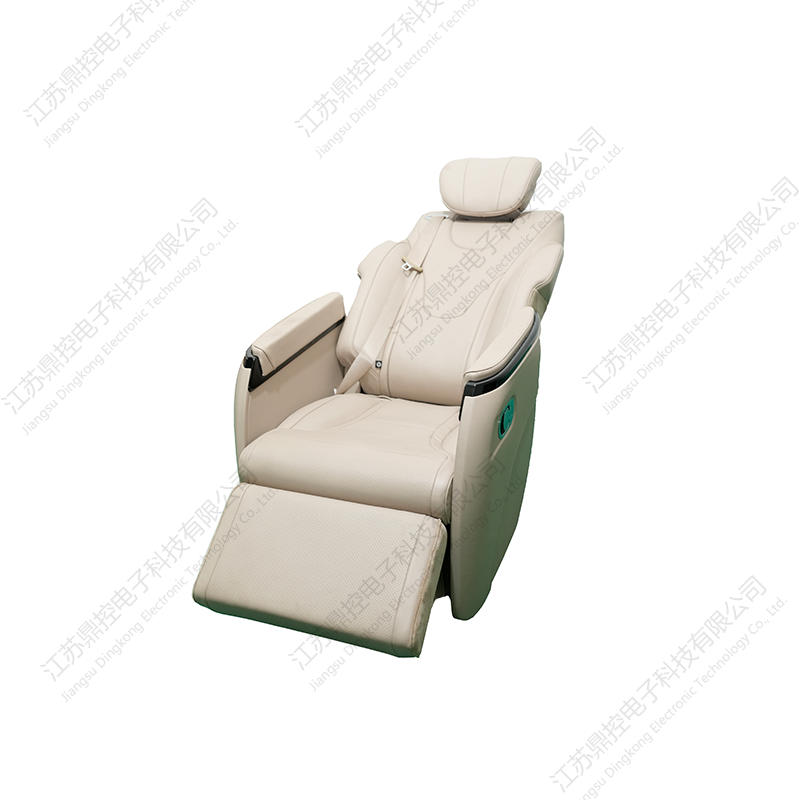
Second-row captain's chairs, available across most Sienna trim levels, give rear passengers their own defined territory. Legroom is generous, and available ottoman-style footrests on higher trims turn long drives into something passengers actually enjoy rather than tolerate. For the Alphard and luxury-oriented conversions, these seats become the primary reason someone chooses the vehicle at all.
For owners looking to elevate the standard interior further, aftermarket seating options add significant possibilities. luxury power swivel seats for MPV cabins allow rear passengers to rotate to face each other or the door — a transformation that turns a minivan into a mobile conference room or first-class cabin.
Toyota Safety Sense is standard equipment across the MPV lineup, and what's included in that package has expanded considerably in recent years. Pre-collision warning with automatic braking, adaptive cruise control, lane departure alert, and automatic high beams are all present without needing to option up to a higher trim level. These aren't checkboxes — they're systems that actively intervene in situations where a driver might react too slowly.
The Panoramic View Monitor on higher Sienna trims uses four cameras to construct a virtual overhead view of the vehicle's surroundings. For a vehicle this long, that system is practical rather than a gimmick — it makes urban parking significantly less stressful. Blind Spot Monitor and Rear Cross-Traffic Alert cover the gaps that cameras alone can miss.
On the technology side, the available 12.3-inch multimedia touchscreen supports wireless Apple CarPlay and Android Auto, and the JBL Premium Audio system on top-spec trims rivals what you'd find in significantly more expensive vehicles. Seven-seat families spending four to six hours on a road trip will notice the difference.
For commercial operators running Hiace fleets, Toyota's approach to durability is the technology story. Interval-based maintenance schedules, parts availability across nearly every global market, and a powertrain proven over decades of hard commercial use represent a different kind of advanced engineering — one measured in years of service rather than screen size.
Even a well-specified factory MPV leaves room for personalization — and in many cases, aftermarket upgrades deliver features that weren't available when the vehicle was built. This is particularly true for older Hiace and Sienna models still in active service, where owners want to bring the cabin experience closer to what current buyers expect from premium transport.
The most impactful upgrades tend to be seat-focused. Replacing stock rear seats with power-adjustable alternatives changes the entire character of a vehicle's rear cabin. premium interior replacement parts for Toyota Sienna and aftermarket upgrades for Toyota Hiace are available in configurations ranging from basic comfort improvements to full executive-class conversions.
Beyond seating, cabin control systems have come a long way. Seat massage modules, heating pads, ventilation fans, and multi-function switches can be integrated into existing seat structures without requiring full replacement — a cost-effective way to add comfort features that weren't available at the factory. For fleet operators, these upgrades can meaningfully improve passenger retention and service ratings.
Exploring the full range of MPV interior replacement parts reveals how much is achievable beyond the factory configuration. For owners who want to understand which upgrades deliver the most long-term value, why MPV interior parts matter for long-term vehicle value offers a practical starting point for planning a cabin transformation.
1: Introduction – Enhancing Comfort and Convenience with Car Armrests The Importance of Comfort in Modern Driving In today’s automotive landscape,...
READ MOREI. IntroductionThe automotive industry is undergoing constant evolution, with a growing emphasis on vehicle maintenance and personalization. For car o...
READ MORE1. Introduction The Tesla Model 3 and Model Y have quickly become two of the most popular electric vehicles on the market. With their sleek designs, i...
READ MORE
Jiangsu Dingkong, No.1, Menlouxia, Changjing Town, Jiangyin City, Jiangsu Province, China
Copyright © 2024 Jiangsu Dingkong Electronic Technology Co., Ltd. All Rights
Reserved.
 Auto Aftermarket Accessories Manufacturers