

 English
 中文简体
中文简体1: Introduction – Enhancing Comfort and Convenience with Car Armrests The Importance of Comfort in Modern Driving In today’s automotive landscape,...
READ MOREMay 14, 2026
Content
Sedan sales in North America have been declining for nearly a decade, with major automakers quietly retiring models that once defined the segment. Meanwhile, hatchbacks have staged a quiet but unmistakable comeback — particularly across Europe, Asia, and among urban drivers who want the footprint of a compact car without sacrificing versatility. In 2026, the question of hatchback versus sedan is no longer just about personal taste. It reflects a broader shift in how people use their vehicles, what they expect from interior space, and how they think about upgrading their driving experience.
The two body styles look similar from the front and share the same basic architecture for most of their length. The difference emerges at the rear — and that single structural decision cascades into meaningful differences in cargo capacity, passenger headroom, daily maneuverability, and long-term practicality. Here is what actually separates them.
The clearest way to understand the difference is to count the boxes. A sedan is a three-box vehicle: one compartment for the engine up front, one for passengers in the middle, and a third, fully enclosed trunk at the rear. These three sections are structurally distinct, with a fixed rear seat back acting as the wall between the cabin and the luggage area.
A hatchback is a two-box vehicle: one compartment for the engine, and a single larger compartment that combines the passenger cabin with the cargo area behind the rear seats. There is no structural wall between where passengers sit and where luggage goes. Instead, a liftgate — the "hatch" — swings upward to open the entire rear of the car.
This distinction seems simple, but it drives nearly every practical difference between the two formats. The sedan's three-box design gives it a lower, sleeker roofline that slopes toward a separate trunk lid. The hatchback's two-box design requires a taller, more vertical rear end to accommodate the combined cabin-cargo space — and that vertical surface becomes the liftgate itself. In Europe, sedans are commonly called "saloons," while hatchbacks have long been the mainstream format across most global markets outside North America.
With the rear seats up, a sedan's trunk and a hatchback's cargo area are often comparable in total volume — the numbers on a spec sheet may look similar. The real difference is access and flexibility, not raw cubic feet.
A sedan trunk has a relatively narrow opening. You load items through the trunk lid, and anything taller than the opening simply will not fit — regardless of how much empty space sits inside. The cargo area is also completely sealed off from the cabin, which means long items like flat-pack furniture, lumber, or sports equipment cannot extend into the passenger area without folding down the rear seats (a feature not all sedans offer, and those that do often provide only a small pass-through rather than a fully flat floor).
A hatchback removes this constraint entirely. Open the liftgate and the entire width and height of the rear cabin is accessible in one motion. Fold down the rear seats and the hatchback transforms into a small van, with a continuous flat load floor stretching from the liftgate to the back of the front seats. Bicycles, surfboards, flat-pack shelving, strollers, and moving boxes all become viable cargo in a way they simply are not in a sedan.
The sedan's enclosed trunk does offer one advantage: security and separation. Items stored in a sedan trunk are invisible from outside the vehicle and insulated from the passenger cabin — useful for groceries, work equipment, or anything you would prefer to keep out of sight and out of smell range.
Both body styles comfortably seat five passengers across two rows. The distinction is in the type of space available, not the quantity of seats.
Because a sedan's three-box design allows the roofline to slope lower and more dramatically toward the rear, the rear cabin sits on a longer wheelbase with more dedicated space between the front and rear seats. The result is more rear legroom in a sedan for a given overall vehicle length. Tall rear passengers, or families where adults regularly sit in the back, will often find sedan rear seats more comfortable on longer journeys.
The hatchback's taller, more upright rear roofline creates the opposite advantage: more rear headroom. Passengers who are tall through the torso rather than the legs, or parents installing rear-facing child seats that require vertical clearance, often prefer the hatchback's cabin proportions. The rear windshield on a hatchback also tends to be larger and more steeply raked, which improves over-the-shoulder visibility when reversing — a practical benefit that is easy to overlook until you are trying to parallel park on a busy street.
Front seat space is effectively identical between the two formats. Both offer similar adjustment ranges, and the differences in front cabin dimensions between a sedan and its hatchback counterpart — on the same model like a Honda Civic or Volkswagen Golf — are typically negligible.
Hatchbacks are shorter than their sedan equivalents. The absence of a protruding trunk means the rear of the car sits closer to the rear axle, reducing overall vehicle length by roughly 20 to 35 centimeters depending on the model. In a dense urban environment, that difference is meaningful — it shortens the gap needed for parallel parking, reduces the turning radius in tight car parks, and makes it easier to judge the rear of the vehicle when reversing into a space.
For drivers who spend most of their time in cities, this is one of the most tangible daily-use advantages a hatchback offers. The smaller footprint also makes lane changes and tight cornering feel slightly more nimble, even when the underlying mechanical platform is shared with a sedan version of the same car.
Sedans carry their own advantages in long-distance or high-speed driving. The lower, more aerodynamic roofline reduces wind resistance at motorway speeds, contributing to marginally better stability and slightly quieter cabin noise at high velocity. The longer wheelbase also tends to produce a smoother, more planted ride on open roads — a characteristic that has historically made sedans the preferred format for executive and luxury vehicles where refinement takes priority over versatility.
On the same platform, hatchbacks typically return slightly better fuel economy than their sedan counterparts — a function of lighter overall weight and, in some cases, reduced aerodynamic drag despite the more upright rear end. The gap is usually modest: expect one to three miles per gallon difference in real-world driving, which narrows further at motorway speeds where the sedan's lower roofline becomes more efficient.
Purchase price follows a similar pattern. Hatchbacks are generally priced at or below equivalent sedan trim levels. On a like-for-like basis — same engine, same equipment level, same brand — the hatchback is rarely the more expensive option, which makes it strong value given the additional cargo versatility it brings.
Resale value varies significantly by market. In North America, sedans have historically held their value reasonably well in mid-size and executive segments, though the ongoing decline in sedan demand has continued to soften resale prices heading into 2026. In Europe and across much of Asia, hatchbacks retain value strongly because they represent the mainstream of the market rather than a niche. If your market is predominantly hatchback-oriented, buying a hatchback is the lower-risk position from a depreciation standpoint.
The hatchback versus sedan debate focuses heavily on exterior design and cargo capacity — but interior comfort is where many drivers spend most of their attention, and it is an area where body style matters far less than people expect.
Both formats share identical front cabin architecture on models that come in both versions. Seat quality, adjustment range, lumbar support, heating, ventilation, and massage functions are all determined by the seat specification and installed modules — not by whether the car has a trunk or a liftgate. This means the interior upgrade path is equally open regardless of which body style you own or prefer.
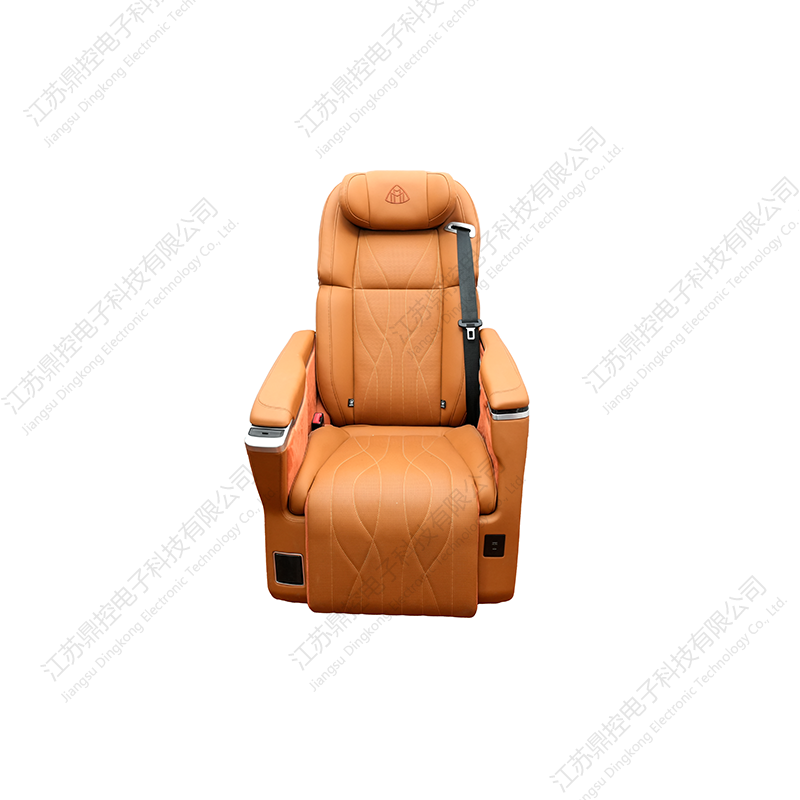
electric power seat upgrades compatible with both hatchback and sedan configurations have become one of the most impactful modifications available to drivers looking to improve daily comfort without changing vehicles. Multi-directional power adjustment, memory positioning, and integrated lumbar support transform the driving experience in either body style — and unlike cargo space, which is fixed by the vehicle's design, seat comfort is genuinely upgradeable.
The same applies to thermal comfort. seat heating, ventilation, and massage modules for custom interior comfort can be retrofitted to seats that did not originally include these features, making them a practical option for drivers who bought a base-trim hatchback or sedan and want to close the comfort gap with higher-spec vehicles without trading up.
For drivers interested in more sophisticated cabin control — integrating seat functions, climate controls, or ambient systems into a unified interface — automobile control modules for advanced seat and cabin electronics provide the backbone for connecting and managing multiple upgraded components through a single system. This capability is body-style agnostic: the electronics do not care whether the car has a trunk or a hatch.
The right choice depends entirely on how you use your vehicle day to day. The table below summarizes the practical match between use case and body style.
| Use Case / Priority | Better Suited: Hatchback | Better Suited: Sedan |
|---|---|---|
| Urban commuting and tight parking | Shorter body, easier to maneuver | |
| Hauling large or awkwardly shaped items | Full rear access, foldable seats | |
| Maximum rear passenger legroom | Longer dedicated cabin space | |
| Rear headroom and child seat clearance | Taller roofline at the rear | |
| Sleek exterior design and lower profile | Classic three-box proportions | |
| Cargo privacy and security | Fully enclosed, hidden trunk | |
| Long-distance highway driving comfort | Lower drag, quieter at speed | |
| Value for money and versatility | Lower price, more flexible interior | |
| Fuel efficiency (light urban use) | Marginally lighter, lower fuel use |
If your driving is mostly city-based, you regularly carry gear that does not fit in a conventional trunk, or you prioritize flexibility over formal proportions, the hatchback is the practical choice for 2026. If rear passenger legroom, a quieter highway experience, and a more traditional exterior silhouette matter more to you — and your cargo needs are met by a standard trunk — the sedan remains a compelling and refined option.
Either way, the body style is just the starting point. Once you are in the driver's seat, the quality of the interior — particularly the seats, controls, and comfort systems — determines how much you actually enjoy the car every day. That part, at least, is within your control regardless of which shape sits in your driveway.
1: Introduction – Enhancing Comfort and Convenience with Car Armrests The Importance of Comfort in Modern Driving In today’s automotive landscape,...
READ MOREI. IntroductionThe automotive industry is undergoing constant evolution, with a growing emphasis on vehicle maintenance and personalization. For car o...
READ MORE1. Introduction The Tesla Model 3 and Model Y have quickly become two of the most popular electric vehicles on the market. With their sleek designs, i...
READ MORE
Jiangsu Dingkong, No.1, Menlouxia, Changjing Town, Jiangyin City, Jiangsu Province, China
Copyright © 2024 Jiangsu Dingkong Electronic Technology Co., Ltd. All Rights
Reserved.
 Auto Aftermarket Accessories Manufacturers