

 English
 中文简体
1: Introduction – Enhancing Comfort and Convenience with Car Armrests The Importance of Comfort in Modern Driving In today’s automotive landscape,...
READ MORENov 24, 2026
Replacing a power-seat control module usually ends at the same small detail: a row of 0.100-inch pin headers on the board and a harness that has to plug into them. In a large share of retrofit and aftermarket builds, that interface is the Molex KK series. The conclusion first: KK is a sound, inexpensive and serviceable choice for dry, low-current cabin wiring, and a poor one anywhere it meets moisture, sustained vibration without strain relief, or more than roughly 4 A per circuit.
Most arguments about pitch, plating and footprint compatibility follow from that single sentence. What follows covers which KK variant suits which job, what the published ratings really mean once the connector is inside a closed console, and where the family stops being the right answer.
Content
KK is Molex's long-running wire-to-board and board-to-board family, built around a crimp housing that slides onto a pin header. A friction-lock ramp retains the housing, and polarizing ribs stop it from being reversed. Terminals are crimped to discrete wires; the header is soldered to the PCB. Three pitches sit in the catalogue: 2.54 mm (KK 254), 3.96 mm (KK 396) and 5.08 mm (KK 508). Headers are offered vertical or right-angle, with or without the friction lock, and some versions are shrouded for scoop protection.
Two boundaries matter more than the part list. KK is not a sealed system: no interface gasket, no wire seal, no IP rating. And it is not an underhood family, because its vibration and thermal specifications were written for industrial, appliance and consumer boards. That is precisely why cabin electronics use it comfortably and engine-bay harnesses do not.
A third boundary is learned in repair shops rather than datasheets. "Looks like KK" is not KK. JST XH, for instance, uses a 2.50 mm pitch, not 2.54 mm. It will often start onto a KK 254 header, then sit crooked, fret faster and bend pins on removal. If a board was laid out for KK 254, fit KK 254.
| Parameter | KK 254 | KK 396 |
|---|---|---|
| Pitch | 2.54 mm (0.100 in) | 3.96 mm (0.156 in) |
| Typical current per contact | Up to about 4 A | Up to about 7 A |
| Voltage rating | 250 V AC/DC | 250 V AC/DC |
| Accepted wire gauge | 22-30 AWG | 18-24 AWG |
| Contact material | Phosphor bronze, tin or gold plating | Phosphor bronze, tin or gold plating |
| Operating temperature | Typically -40 to +80 °C | Typically -40 to +80 °C |
| Header styles | Vertical, right-angle, friction lock, shrouded | Vertical, right-angle, friction lock |
| Typical fit | Signal and low-power board links | Motor, heater and higher-current board links |
Those figures are test-condition maximums, normally measured with every contact energised at 25 °C ambient. Inside an armrest console that reaches 60 °C, on 1 oz copper, a 4 A KK 254 circuit will run noticeably warmer than the datasheet implies. A practical derating rule for cabin assemblies is to hold continuous current at 50-60% of the published number and confirm temperature rise on the actual board rather than in a spreadsheet.
Do not raise capacity by paralleling two contacts. Current sharing between crimp contacts is unpredictable, and one terminal almost always carries more than its share. If the load exceeds what KK 254 can give, step up to KK 396 or change family.
The family turns up wherever a small board has to talk to a handful of discrete wires: seat switch panels, massage and ventilation modules, armrest screens, ambient lighting controllers and the relay boards behind them. The reason is practical rather than elegant. KK headers are cheap, widely stocked, serviceable with a small screwdriver, and available in enough circuit counts that a designer can add a function without changing the footprint.
For anyone building complete cable assemblies, connector choice and harness design are one decision rather than two: terminal plating, wire gauge, loom length and strain relief all have to match the module the harness plugs into.
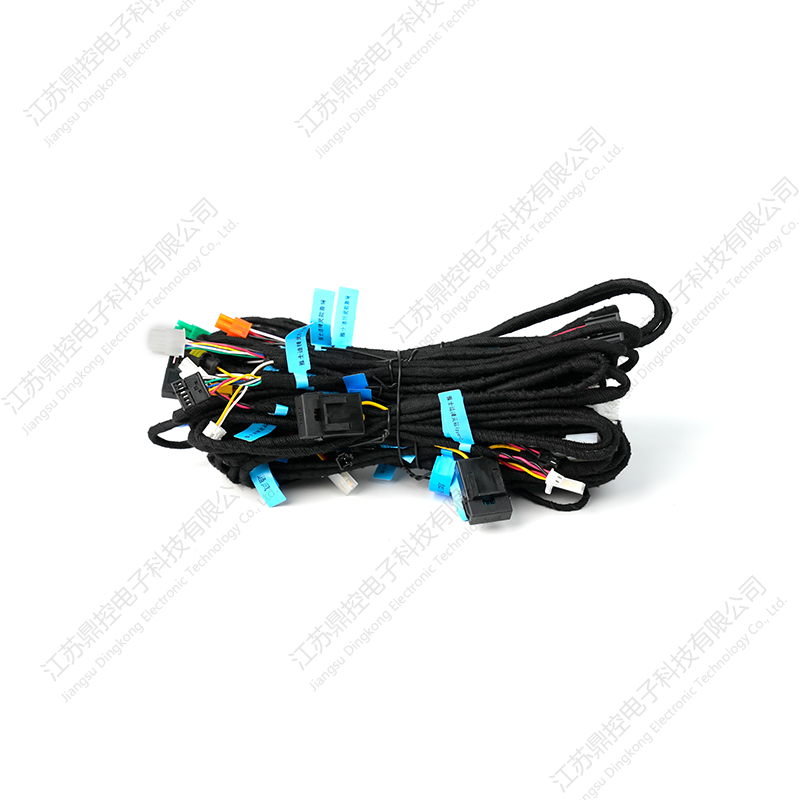 Vehicle Wiring Harness for Tesla, Benz, and BMWVehicle-specific harness assembly with oxygen-free copper conductors, IP67 TPE jacket and plug-in connectors, suited to complete cable builds where connector and harness are specified together.View Product →
One cabin-specific point is worth repeating. KK retains by friction, not by a latch you can hear click. In a seat pedestal that flexes, the housing should be supported within about 50-80 mm of the header, and the bundle should be tied so that pull is never carried by the crimp joint.
A KK header is only as good as the board it sits on. Relay-heavy control units, the kind that drive seat motors, door locks, lighting or lift mechanisms, need several separate circuits, and each one should be reviewed for inrush current rather than steady-state draw alone. A seat motor drawing 3 A while running can pull five to eight times that for a fraction of a second at start-up, and a connector comfortable at 4 A continuous may still arc at the contact interface over thousands of cycles.
Enclosure design matters just as much. A sealed control box rated IP65 still has an unsealed KK interface on the inside, so the wiring exit, grommet and loom entry carry the real risk. Where a module sits low in a door or under a seat and collects spills or cleaning fluids, a sealed connector family is the honest choice even at a higher unit cost.
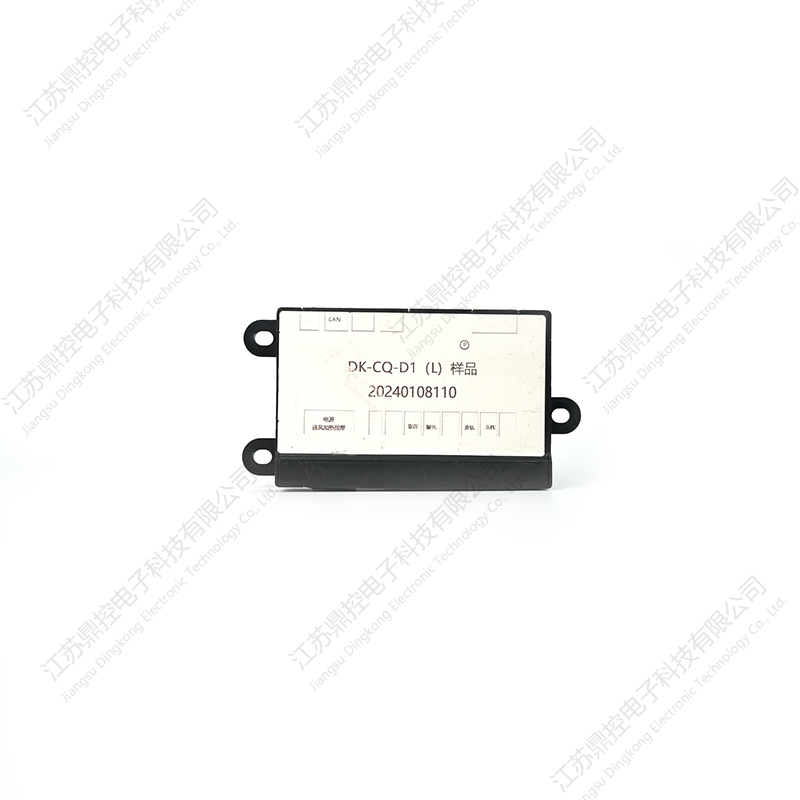 DK-7.0 Vehicle Control Unit for Electronic RetrofitsCompact IP65 control module for seat, lighting and soft-close door retrofits, with industrial-grade signal handling for integration into vehicle electronic architectures.View Product →
When the module is the starting point rather than the connector, it pays to know what each output actually does before specifying terminals; the functions, components and diagnostic behaviour of a vehicle control module are worth reviewing alongside the connector drawing.
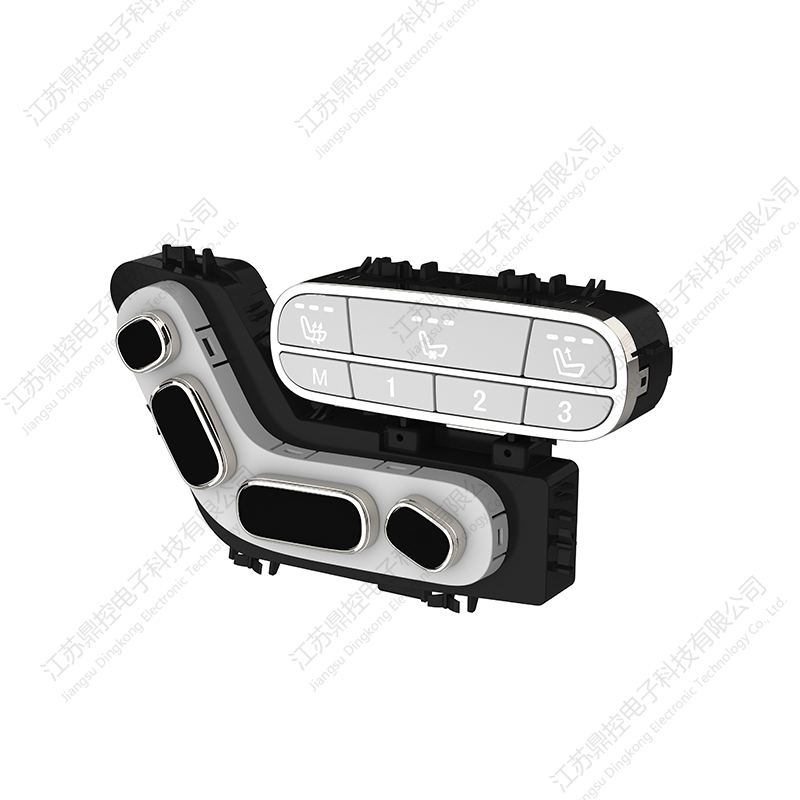 DK-36 Seat Switch Assembly with Toggle and Physical ButtonsDrop-in replacement seat switch for luxury vehicles, offering multi-function seat adjustment, LIN communication, 200,000-cycle performance and a two-year warranty.View Product →
Cost inside the KK family is driven by circuit count, plating, shroud style, packaging and order quantity, not by the pitch itself. The pricing that should raise a question is a quote well below authorised-distribution levels on a part described as original. Broker stock is where most counterfeit and re-labelled housings enter a build, and the failure mode is rarely immediate: it shows up as a loose lock ramp, a housing that yellows in a warm console, or plating that frets away after a season of use.
Practical safeguards are unglamorous. Buy terminals and housings from the same series and the same source, keep the lot code with the build record, and check a sample against a known-good part for moulding flash, resin colour and lock-ramp height. Mixed-brand "compatible" parts usually fail at the dimensions nobody measures, which are the ones that hold the connector together.
KK earns its place in dry, low-current, rarely unmated cabin wiring. It stops being appropriate in a few recognisable situations:
Getting the Molex KK series right is mostly a matter of not asking it to do two jobs it was never designed for: sealing and high current. Measure the pitch, match the housing to the header, derate the rating for the temperature inside the console, and crimp to the drawing. Everything else, from plating to circuit count, follows from the environment the connector will actually live in.
Where the connector is one line item in a larger cabin build, whether that means a full harness, a switch panel or an armrest module, it is worth comparing the whole custom automotive electronics range before a footprint is locked in.
1: Introduction – Enhancing Comfort and Convenience with Car Armrests The Importance of Comfort in Modern Driving In today’s automotive landscape,...
READ MOREI. IntroductionThe automotive industry is undergoing constant evolution, with a growing emphasis on vehicle maintenance and personalization. For car o...
READ MORE1. Introduction The Tesla Model 3 and Model Y have quickly become two of the most popular electric vehicles on the market. With their sleek designs, i...
READ MORE
Jiangsu Dingkong, No.1, Menlouxia, Changjing Town, Jiangyin City, Jiangsu Province, China
Copyright © 2024 Jiangsu Dingkong Electronic Technology Co., Ltd. All Rights
Reserved.
 Auto Aftermarket Accessories Manufacturers