

 English
 中文简体
中文简体1: Introduction – Enhancing Comfort and Convenience with Car Armrests The Importance of Comfort in Modern Driving In today’s automotive landscape,...
READ MOREAug 24, 2026
Installing a set of power seats or a body control module into a vehicle that was not originally equipped with those options usually stops at the same wall: the factory wiring does not accommodate the new components. The base loom lacks the extra circuits, the connectors do not match, and every fuse position in the box is already occupied. Many installers respond by cutting into the stock wires with splice connectors, and that works until thermal cycling, vibration, or a weak crimp turns a comfort feature into an intermittent electrical problem. A custom automotive wiring harness removes the uncertainty at the design stage because it is built around the specific vehicle, the specific component, and the exact circuits involved.
Content
A vehicle wiring harness is the nervous system of the car. It bundles the individual conductors that carry power, ground, and sensor signals into a single routed assembly protected by sleeving, connectors, seals, and clips. What makes a harness custom is that every wire length, connector position, and pin assignment is determined by a real installation instead of by a generic production-line template.
A properly designed custom harness typically contains:
Because the design starts from your configuration, the finished harness fits the way a factory part would. That is a different result from wiring a car one connection at a time.
The conclusion first: for any electrical job that involves more than two or three added circuits, a custom harness is safer, faster to install, and easier to troubleshoot than cutting into the original loom.
Every connection in a custom harness is made with the correct terminal and a calibrated crimp tool. Inline splice connectors rely on a crimp barrel that crushes multiple strands, and under engine-bay temperatures the connection loosens over time. A loose splice increases resistance, which raises heat, which loosens the connection further. A properly crimped and sealed terminal does not go through that cycle.
Undersized wire heats up under load, and oversized fuses defeat the protection of the circuit. A harness manufacturer calculates gauge from the actual current draw, then treats the fuse as the last line of defense. Add-ons like seat heaters, ventilation fans, and solenoid locks draw enough current to make this calculation essential rather than decorative.
Installers who fit aftermarket seats, touch screens, or control modules usually find that a plug-and-play harness reduces installation time from a full day to a few hours. Labeled circuits also change the troubleshooting experience. When a fault appears later, a technician can identify the affected circuit from the label and test it directly instead of tracing every wire back through the dash.
Most reputable manufacturers publish a custom automotive wiring harness section that shows representative products and the information required for a quote. The more complete your specification, the lower the risk of mismatch between the product and the vehicle.
The parameters below are the ones that separate a reliable harness from a marginal one.
| Specification | Why it matters | Typical choice |
|---|---|---|
| Wire gauge | Determines current capacity and voltage drop over length | 18 AWG for signal circuits; 12 to 14 AWG for power feeds |
| Insulation temperature rating | Prevents softening and short circuits near heat sources | 125 °C-rated GXL or TXL wire for cabin and engine areas |
| Connector type | Must match the component and the vehicle connector | OEM-style or waterproof connector families with verified pinouts |
| Sealing | Protects terminals from moisture and corrosion | IP67-rated connectors and sealed entry points for under-seat and floor routing |
| Protective sleeving | Provides abrasion, heat, and chemical resistance | Split loom or braided sleeve with heat shrink at branch points |
| Terminal plating | Influences corrosion resistance and connection stability | Tin plating for standard use; gold plating for low-current signal circuits |
| Labeling | Speeds up installation and later diagnostics | Printed labels on each branch at regular intervals |
| Electrical testing | Verifies that every circuit is continuous and isolated | 100% continuity and dielectric withstand testing before shipping |
Custom harnesses are most common in interior comfort upgrades and control-system retrofits, precisely because those projects involve components that the original loom was never designed to feed.
Electric seats with forward-and-back travel, pan angle adjustment, lumbar support, heating, ventilation, and massage each require separate circuits and often a dedicated switch interface. A harness that merges the seat motors, the switches, and the power feed into one assembly makes the upgrade a mechanical job rather than an electrical engineering project.
When the added components are driven by a control module, the harness becomes the physical map between the module outputs and the loads. A module with multiple relay outputs needs to know exactly which pin drives which seat motor or light. A good example is a 12V/13V vehicle control unit with relay outputs: its function depends on a harness that routes each output to the correct device and returns a clean ground path.
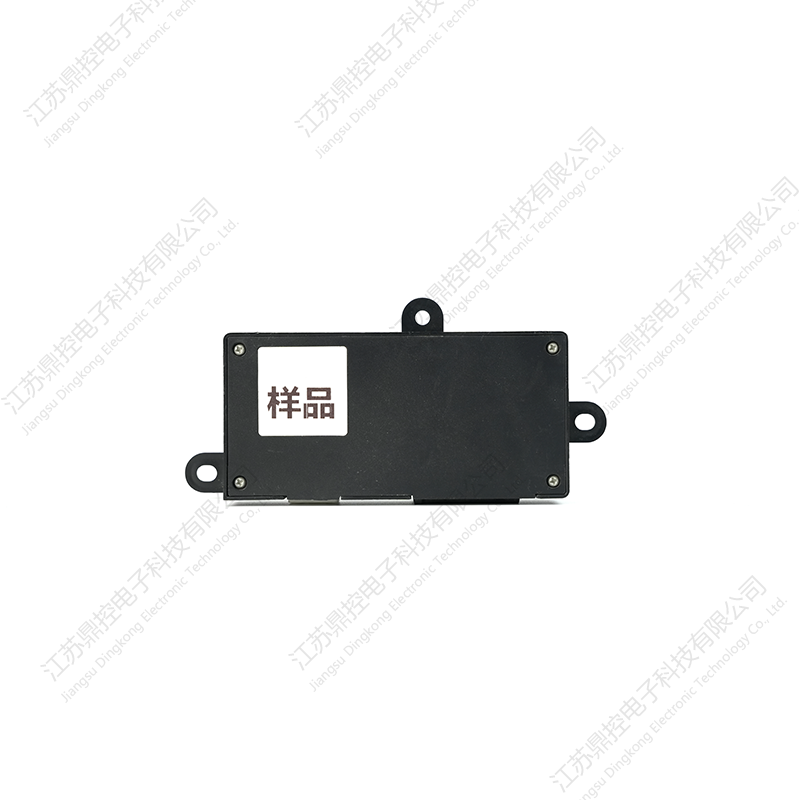 CYZ-A Vehicle Control Unit - 12V/13V Suppliers, Custom Company - Jiangsu DingkonDingkong is China wholesale CYZ-A Vehicle Control Unit - 12V/13V suppliers and custom company, details:Our CYZ-A vehicle control unit is ...View Product →
Some projects target a specific model family. For Tesla, Mercedes-Benz, and BMW vehicles, the connector families and module locations differ from mainstream brands, so a generic harness will not fit. A vehicle electronic wiring harness for Tesla, Benz, and BMW models is built around those connector layouts and trim levels, which is the difference between a clean installation and a shelf full of adapters.
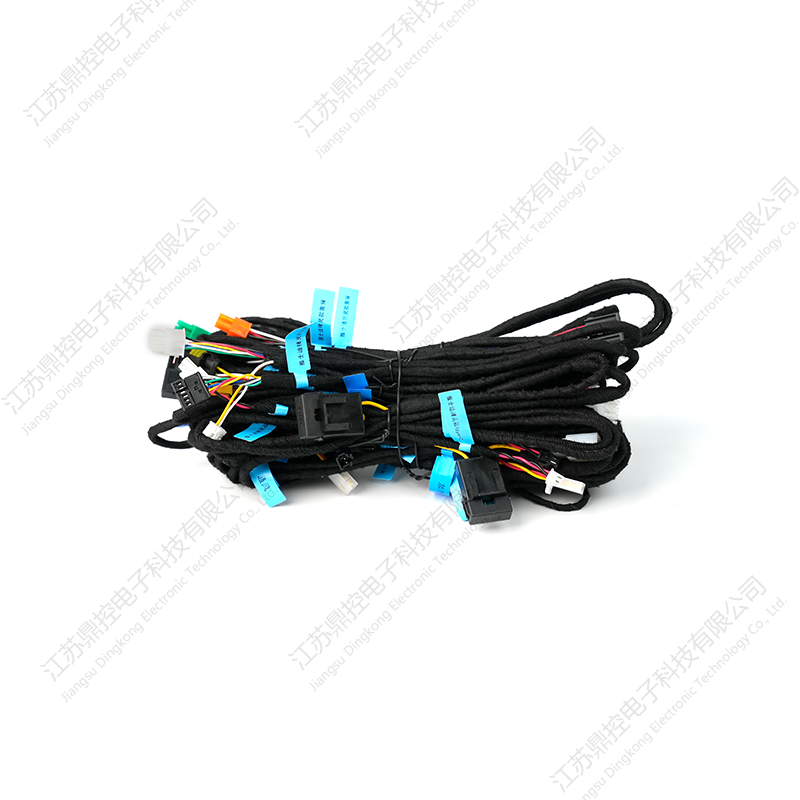 Vehicle Electronic Wiring Harness for Tesla/Benz/BMW Suppliers, Custom Company -Dingkong is China wholesale Vehicle Electronic Wiring Harness for Tesla/Benz/BMW suppliers and custom company, details:This vehicle's ele...View Product →
Touch screen panels, armrest boxes with embedded screens, and multifunctional foldable tables all need power, illumination, and signal wiring. Bundling those circuits into a single harness keeps the interior looking factory-fresh and prevents the loose-wire failures that appear after the trim panels go back on.
Because the harness is a safety-critical component, the supplier matters as much as the design.
It also helps to work with a supplier whose broader product range is relevant to your project. A manufacturer with a clear custom car electronics lineup is more likely to understand the interaction between harnesses, switches, control modules, and screens than a company that only sells commodity cable assemblies.
Every electrical upgrade project has a point where the design decisions are cheap and a point where they become expensive. The cheap point is before the trim is removed and the welding starts. If you specify the harness from the beginning, the installation becomes a mechanical procedure: connect the matching connectors, mount the module, and test the labeled circuits. That sequence is faster, safer, and easier to maintain than a loom full of splices, and it is the reason custom automotive wiring harnesses are a standard part of professional automotive electrical work.
1: Introduction – Enhancing Comfort and Convenience with Car Armrests The Importance of Comfort in Modern Driving In today’s automotive landscape,...
READ MOREI. IntroductionThe automotive industry is undergoing constant evolution, with a growing emphasis on vehicle maintenance and personalization. For car o...
READ MORE1. Introduction The Tesla Model 3 and Model Y have quickly become two of the most popular electric vehicles on the market. With their sleek designs, i...
READ MORE
Jiangsu Dingkong, No.1, Menlouxia, Changjing Town, Jiangyin City, Jiangsu Province, China
Copyright © 2024 Jiangsu Dingkong Electronic Technology Co., Ltd. All Rights
Reserved.
 Auto Aftermarket Accessories Manufacturers