

 English
 中文简体
中文简体1: Introduction – Enhancing Comfort and Convenience with Car Armrests The Importance of Comfort in Modern Driving In today’s automotive landscape,...
READ MORESep 01, 2026
When a power seat stops responding after a switch replacement, most people blame the seat motor. The real fault often sits in the circuit feeding it: a corroded terminal, a loose ground, or a control module that never received the trigger signal. The same pattern appears with interior lighting, touch screens, and door locks. If you understand how automotive circuits behave under load, you can diagnose failures faster and choose components that match the real current draw. That is the conclusion up front, and this article explains the fundamentals behind it.
Content
An automotive circuit is a closed path that carries current from a power source to a load and returns it to the source. In most vehicles that source is a 12V battery charged by an alternator. Newer architectures use 48V systems, and EVs use high-voltage packs, but the electrical rules stay the same.
Three quantities define any circuit. Voltage is the pressure pushing current. Current is the flow of electrons. Resistance opposes that flow and turns electrical energy into heat. Ohm's Law connects them: V = I x R. A 12V circuit feeding a 2A load sees about 6 ohms of total resistance. If resistance drops, current climbs. If resistance rises, current falls. That relationship explains many intermittent faults, because a bad connection changes the resistance by only milliohms and still produces visible symptoms.
Vehicle harnesses mix series and parallel sections. A series branch gives one current path through multiple loads, so one open point stops everything after it. A parallel branch gives each load its own path, so a failed accessory does not disable the others.
| Characteristic | Series Circuit | Parallel Circuit |
|---|---|---|
| Current path | Single path for all loads | Separate branch for each load |
| Voltage | Divided across loads | Same voltage across each branch |
| Failure effect | One open stops the whole circuit | Other branches keep working |
| Typical use | Fuse links, thermal sensors | Lighting, control modules, harness branches |
When a load turns on, it draws its rated current plus an inrush spike. Lamps and heating elements are resistive, so the spike is small. Motors and solenoids are inductive, so inrush can be several times the steady current. Good circuit design leaves headroom for that surge, otherwise fuses blow during the first milliseconds.
Nearly every automotive circuit fault fits one of four categories.
These faults produce recognizable signatures. An open circuit gives zero current with no voltage at the connector. High resistance gives normal voltage at rest but a visible drop under load. A short to ground gives a humming relay or a fuse that keeps opening. A short to power gives cross-activation between controls.
A control module is the intelligent hub of a circuit group. It reads inputs from switches or sensors, decides what the load should do, and drives relay outputs or semiconductor switches. Modern modules also communicate over CAN bus or RS485, which shortens wiring and makes diagnostics possible from one interface.
Three details matter when integrating a module. Relay contact ratings must exceed the maximum load current, including inrush. Communication wiring needs proper termination and twisted pair routing to reject noise. The module supply must stay stable during load switching, because a voltage sag can reset the processor.
A vehicle control unit with multiple relay outputs and RS485 support replaces a mess of separate relays and switches in a seat or interior upgrade. It centralizes control and adds protection logic that simple switches cannot offer. If you need a deeper look at the internal functions and diagnostics of these units, read this explanation of vehicle control module functions, components, and diagnostics.
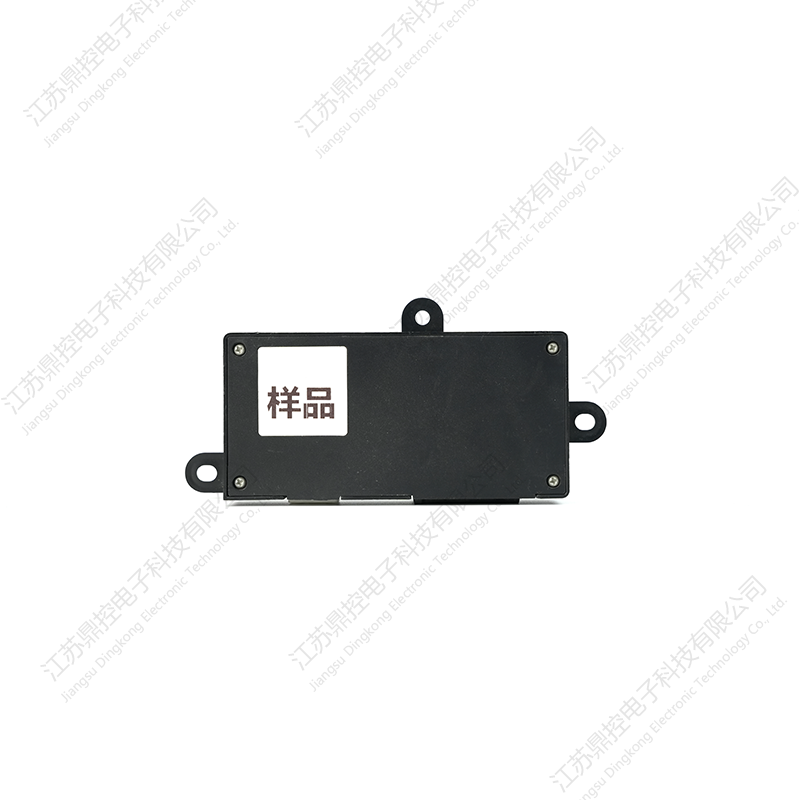 12V/13V Vehicle Control Unit with Relay Outputs and RS485 SupportThis control unit centralizes seat, lighting, and door functions, reducing complex wiring and improving system stability. Its industrial-grade chip ensures reliable signal transmission, while sealed connectors and short-circuit protection enhance durability in automotive environments.View Product →
A well-designed module also reduces the chance of open, high-resistance, or short-circuit failures. Sealed connectors and conformal-coated boards keep moisture from causing high resistance, and internal short-circuit protection prevents a faulty load from damaging the module.
No circuit is more reliable than its weakest connection, so wire gauge, fuse size, and grounding are the most practical aspects of any automotive electrical project.
Wire gauge controls voltage drop and heat. For a 10A load over two meters, 14 AWG copper is a safe starting point. An undersized wire creates voltage drop that shows up as dim lights or slow motors, and the wire temperature can climb enough to melt insulation.
Fusing protects against shorts and overloads. A fuse rating slightly above normal load current is common, such as 15A for a 10A circuit. Never oversize a fuse to stop nuisance trips, because that makes the wire the weakest point.
Grounding is the most overlooked part of a circuit. A poor ground can mimic a shorted module, since current takes an unintended path through other components. Use star washers, remove paint and corrosion, and secure the ring terminal with the right torque.
In wet zones like doors and floors, sealed connectors keep corrosion from adding resistance over time. A connector that starts fine can become a high-resistance fault after a few thousand miles of water and vibration.
Seat systems show how circuit planning works in practice. A power seat switch drives motors for forward, backward, reclining, and leg support functions. The same seat may include a heating pad and a ventilation fan, each with different current characteristics.
Heating pads are resistive. A 40W pad at 12V draws about 3.3A. Ventilation fans draw less, but their motors create an inrush as they spin up. Massage systems add air bladders driven by a pump, which draws current intermittently.
Before retrofitting seats, verify three things. Can the existing circuit supply the total current of all new loads? Does the switch contact rating match the motor current with headroom for stall conditions? Does the heating element have thermal protection and its own fuse?
A switch rated for the wrong current will arc and wear out, causing intermittent operation that is hard to trace. That is why the seat switch and the upgrade module must be selected together, not as isolated parts. A complete guide to automobile electric seat features, installation, and maintenance covers these interactions in more detail.
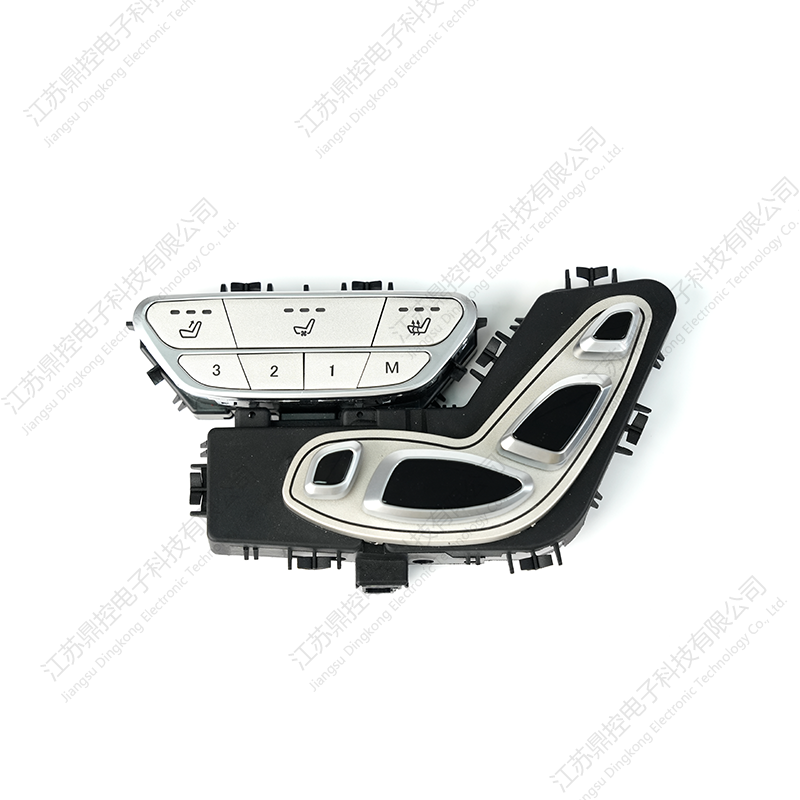 Customizable Class V Seat Switch for Premium Seating ControlDesigned as a direct replacement, this seat switch offers memory presets, ventilation, heating, and massage functions. Its intuitive interface minimizes user errors, and when matched with the correct current rating, it ensures dependable operation in upgraded vehicle seats.View Product →
A quality seat switch with pressure-sensitive or capacitive buttons also simplifies the human-machine interface. When the interface is intuitive, drivers make fewer mistakes and the system stays within normal operating limits.
Automotive circuits face moisture, vibration, and noise every day. Components in doors, under seats, or near the trunk are exposed to water from rain, car washes, and condensation. That is why IP65 and IP67 ratings matter.
At the circuit level, corrosion from moisture raises resistance and can eventually destroy a PC board. Sealed connectors and conformal coatings reduce that risk. A control module with IP65 dustproof construction is intended for locations where dust would otherwise enter the housing.
Electromagnetic interference is the other silent killer. CAN bus relies on differential signaling and twisted pairs to cancel noise. Termination resistors prevent reflections that corrupt data. When extra modules are added without attention to routing, communication errors appear as random failures in the functions controlled by the bus.
Heated seat pads also need protection. A pad rated IP67, 40W, and five levels of temperature adjustment survives moisture and heats evenly. The thermal cutoff prevents overheating in the event of a short.
Custom projects start with a map of the load. List every device, its current draw, its position, and whether it runs continuously or intermittently. Then decide where fuses, relays, and connectors belong.
When you order a custom wiring harness, specify the pinout, wire gauge, insulation rating, and connector type. Automotive-grade insulation is rated for at least 105°C, and engine bay locations may require 125°C. If the harness carries CAN or RS485 data, note the twisted pair and shield requirements.
A manufacturer that designs and produces the harness in-house can match the original connector and integrate optional modules. That reduces the risk of a mismatch at the plug and shortens installation time. Ask for a drawing before production, and confirm the IP rating for connectors in wet areas.
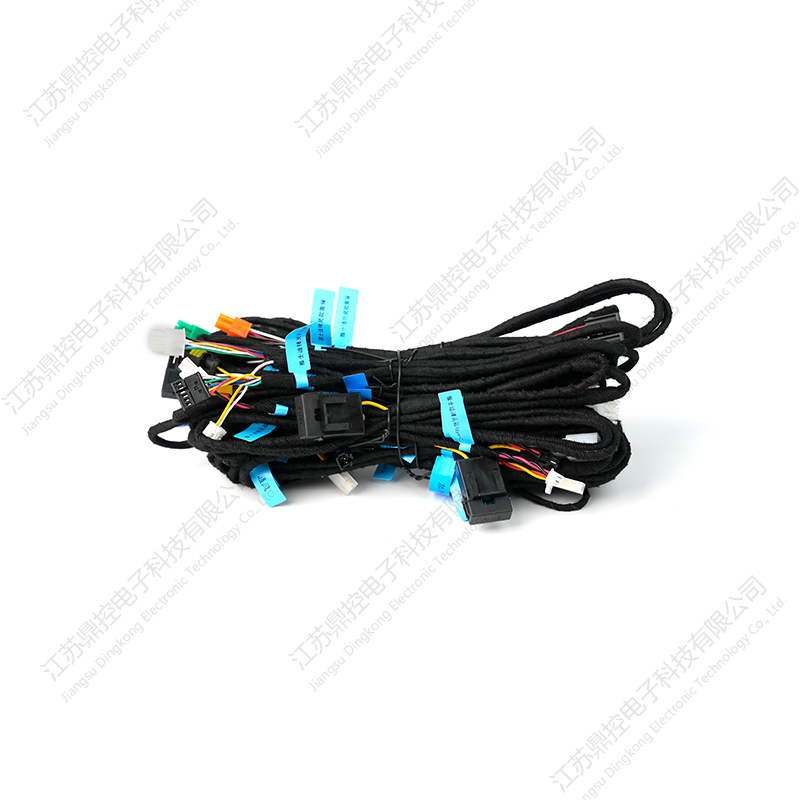 OEM-Standard Custom Automotive Wiring Harness for Reliable InstallationManufactured in-house to match original connectors, this harness reduces mismatch risks and shortens installation time. High-temperature flame-retardant wires, shielding, waterproofing, and vibration resistance ensure stable performance in harsh automotive conditions.View Product →
Automotive circuits reward careful planning. Choose the right wire gauge, fuse close to the load, ground properly, and match components to the actual current. When you know how series and parallel branches behave, how the four failure modes present themselves, and how control modules centralize switching, a retrofit or repair becomes predictable. That predictability is what separates a dependable upgrade from a recurring problem.
1: Introduction – Enhancing Comfort and Convenience with Car Armrests The Importance of Comfort in Modern Driving In today’s automotive landscape,...
READ MOREI. IntroductionThe automotive industry is undergoing constant evolution, with a growing emphasis on vehicle maintenance and personalization. For car o...
READ MORE1. Introduction The Tesla Model 3 and Model Y have quickly become two of the most popular electric vehicles on the market. With their sleek designs, i...
READ MORE
Jiangsu Dingkong, No.1, Menlouxia, Changjing Town, Jiangyin City, Jiangsu Province, China
Copyright © 2024 Jiangsu Dingkong Electronic Technology Co., Ltd. All Rights
Reserved.
 Auto Aftermarket Accessories Manufacturers