

 English
 中文简体
中文简体1: Introduction – Enhancing Comfort and Convenience with Car Armrests The Importance of Comfort in Modern Driving In today’s automotive landscape,...
READ MOREOct 12, 2026
An installer snaps a four-way power seat switch into a van door panel, hears the click, and returns the vehicle. Six weeks later the seat stops sliding backward on one side. The switch is fine. The wire terminal has crept out of its cavity by roughly 1.5 mm, the contact has opened, and the customer is now blaming the seat motor, the control module, and the shop.
A connector secondary lock is the feature that exists to prevent exactly that failure. It is a redundant, mechanically independent retention layer that keeps a terminal seated inside its cavity, or keeps two mated connector halves fully engaged. Primary retention alone, whether it is a plastic lance, a metal beam, or simple friction between mating halves, usually holds on a bench test. It is not always enough after 200,000 km of vibration, thermal cycling, and one field repair where a technician re-terminated a single wire.
The sections below explain what each secondary lock does, how terminal position assurance and connector position assurance differ, where these features fail in practice, and what to write into a purchase specification so a harness or switch assembly arrives with the lock actually engaged.
Content
Every automotive connector has at least two retention layers, and sealed high-vibration designs often have three or four. They operate at different levels of the connection, and each one covers a different failure mode. A datasheet line that simply says "secondary lock: yes" tells you almost nothing useful.
| Layer | Where it sits | What it prevents | How a build operator verifies it |
|---|---|---|---|
| Primary terminal retention | Inside each housing cavity | Axial movement of a single terminal | Pull test on the wire after insertion, measured against a crimp and retention spec |
| Terminal position assurance (TPA) | A separate comb, plate, or wedge inserted into the housing | Terminal back-out if the primary lance relaxes, cracks, or was never engaged | Visual witness mark or audible click when the TPA reaches its final position |
| Housing latch | Mating interface | Unintentional unmating of the two halves | Latch deflection and release force checked against the connector standard |
| Connector position assurance (CPA) | Outside one or both mating halves | Partially mated connectors separating under vibration | CPA slides closed only on a fully mated pair; checked by hand or by vision system |
Read together, the layers form a chain. The terminal is held by the lance, the lance is backed up by the TPA, the halves are held by the latch, and the latch position is confirmed by the CPA. Break one link and the others carry load they were never designed to carry alone.
A TPA is a comb, plate, or wedge of plastic inserted into the housing after the terminals are crimped and pushed into their cavities. Its teeth sit behind the shoulder of each terminal and take the axial load if the primary lance relaxes, cracks, or was never properly seated. The engineering value of a TPA is not only retention: a correctly designed comb physically cannot be pushed into its final position if one terminal is short of full insertion. That converts a hidden assembly error into a visible, immediate one at the harness bench, which is often worth more than the extra retention force.
Practical detail worth training for: many TPAs have a pre-lock position for shipping and a final lock position after wire insertion. A TPA sitting in the pre-lock position looks seated to the eye and provides no retention at all. Inspectors should be able to tell the two positions apart on the specific part number they are working with.
A CPA is a sliding latch on the outside of the housing pair. It can only be closed when both halves are fully mated, so it works as a mating detector as well as a lock. On a seat frame, an armrest cavity, or a door module, where nobody can see the connector, the CPA click is frequently the only positive confirmation an operator gets. Note carefully what a CPA does not do: it does not retain terminals. A connector with a closed CPA can still have a terminal backing out of its cavity, because the two features sit at different levels of the assembly.
Secondary locking adds a few grams of plastic per connector. That cost is small measured against the conditions automotive connectors actually face:
The failure patterns are consistent across harness shops, upgrade workshops, and fleet maintenance:
The downstream effect is usually misdiagnosis. A partly backed-out terminal produces resistance spikes under load, so the seat moves and then stops, or a lighting circuit flickers only on rough roads. Teams often replace the module first, because the fault code points there. A wiring and connector-level diagnostic routine, described in this guide to vehicle control module diagnostics, should always include a physical back-out check at the connector before any module is swapped.
Buyers who write secondary locking requirements into the drawing get fewer warranty returns than buyers who leave it to the supplier's default. The items below are worth locking down:
A secondary lock is only as good as the assembly behind it. A harness where terminals are crimped to a measured pull-off value, TPAs are seated to a documented position, and the finished branch is continuity tested will hold up in service far better than one where the locking feature is treated as an optional finishing step.
For upgrade and replacement projects, this means buying from a supplier that builds the harness around the connector system rather than around whatever terminals are in stock.
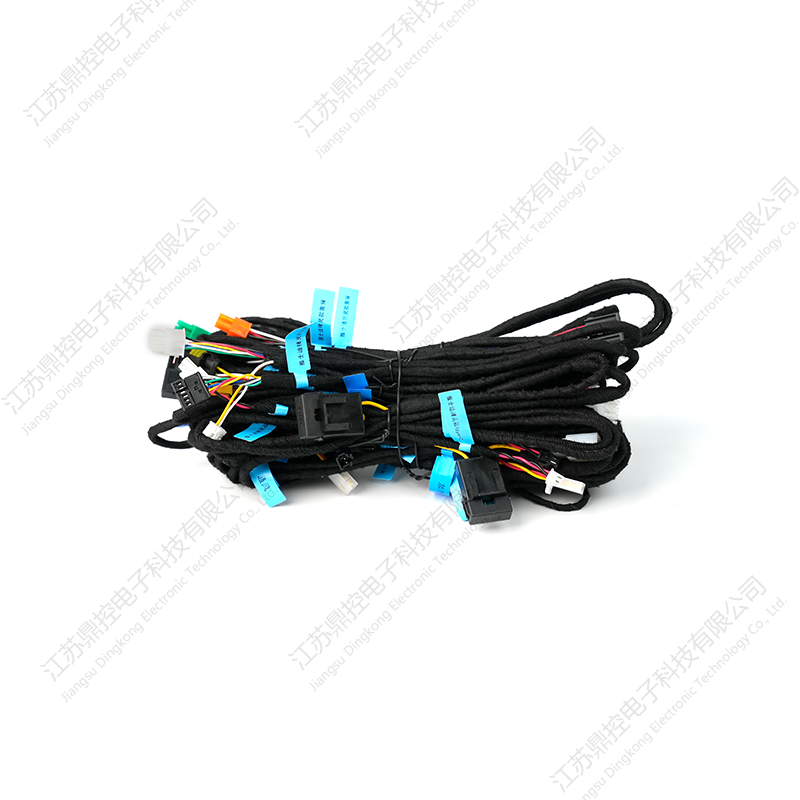 Automotive Wiring Harness for Tesla, Mercedes-Benz, and BMW VehiclesFor upgrade or replacement projects, this harness offers oxygen-free copper conductors, high-temperature insulation, IP67 protection, and Tesla/Benz/BMW plug-in connector options.View Product →
Custom harness work for a specific vehicle platform is one route. The other is choosing modules whose mating interfaces are already designed for sealed, vibration-loaded environments, so the connector pair carries proper keying, a latch, and a CPA from the start.
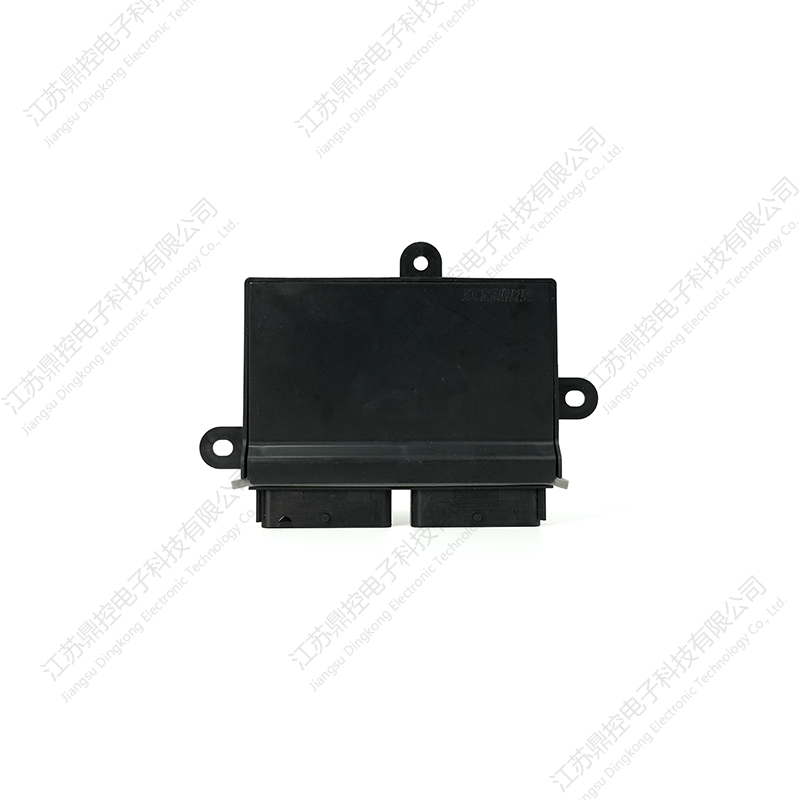 DK-B-1947 Vehicle Control Unit with IP65 WaterproofingFor sealed, vibration-loaded vehicle modules, this IP65 control unit manages luxury seat adjustment, ambient lighting, and electric suction door closure with industrial-grade signal accuracy.View Product →
Where a control unit is specified as dust and waterproof, the connector interface has to earn that rating as well. A sealed housing with a half-mated plug is a sealed housing in name only.
Seat switch assemblies show why the detail matters. A switch panel that replaces an original part has to present the same mating interface, keying, and terminal arrangement as the unit it replaces, and its connector body has to accept the vehicle-side plug with the same latching behaviour. When a replacement assembly is fitted with the TPA left in the pre-lock position, the seat works perfectly in the workshop and develops an intermittent fault once summer heat and road vibration arrive.
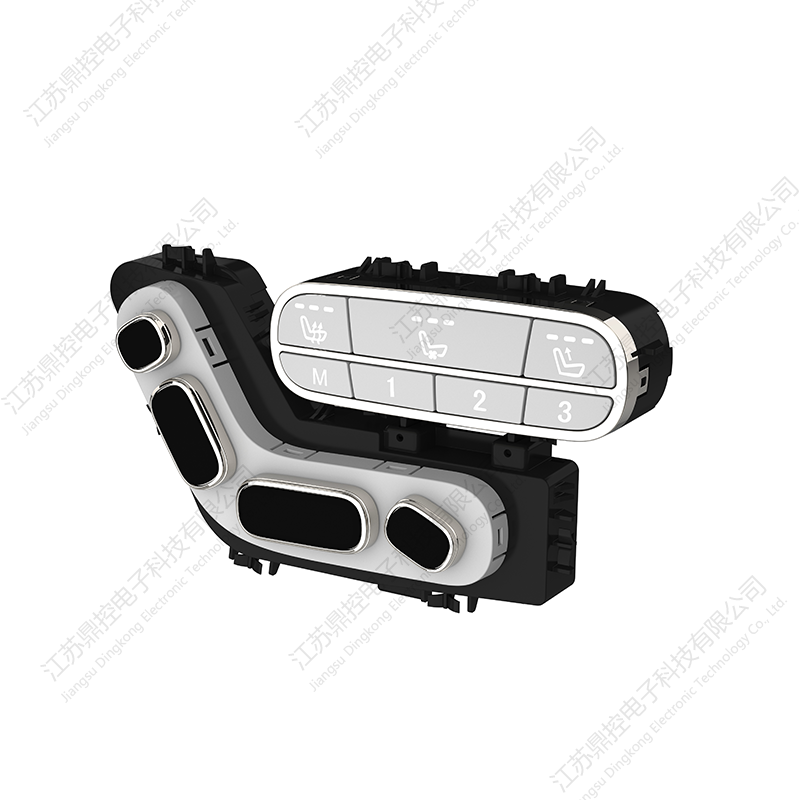 DK-36 Customizable Seat Switch Assembly ReplacementDesigned as a customizable drop-in replacement, it provides LIN communication, toggle and physical buttons, memory modes, and seat comfort controls for luxury vehicle upgrades.View Product →
The same logic applies to heated seat pads, ventilation fans, and massage modules: the connector at the end of the pigtail is part of the reliability specification, not an accessory to it. Custom wiring options help here, because a harness built to the custom automotive wiring harness specification can be terminated with the exact connector series, sealed or unsealed, that the vehicle side expects.
Secondary locking is one of the least expensive reliability features in a vehicle's electrical system. The cost appears when it is missing: intermittent faults that are hard to reproduce, repeat repairs, and warranty returns that never trace back to the connector because nobody looked. If the connector sits somewhere nobody can see, that is precisely where the secondary lock needs to be written into the drawing, verified at the bench, and confirmed before the vehicle leaves the bay.
1: Introduction – Enhancing Comfort and Convenience with Car Armrests The Importance of Comfort in Modern Driving In today’s automotive landscape,...
READ MOREI. IntroductionThe automotive industry is undergoing constant evolution, with a growing emphasis on vehicle maintenance and personalization. For car o...
READ MORE1. Introduction The Tesla Model 3 and Model Y have quickly become two of the most popular electric vehicles on the market. With their sleek designs, i...
READ MORE
Jiangsu Dingkong, No.1, Menlouxia, Changjing Town, Jiangyin City, Jiangsu Province, China
Copyright © 2024 Jiangsu Dingkong Electronic Technology Co., Ltd. All Rights
Reserved.
 Auto Aftermarket Accessories Manufacturers