

 English
 中文简体
中文简体1: Introduction – Enhancing Comfort and Convenience with Car Armrests The Importance of Comfort in Modern Driving In today’s automotive landscape,...
READ MORESep 14, 2026
Take the harness out of a ten-year-old sedan and the fault is usually in one spot: an undersized wire feeding an added load. The radio still works, the windows still roll, but the 18-gauge feed to the door switch has been carrying current that the circuit was never designed to handle. The failure was not sudden. It was written into the original specification, then ignored when someone added aftermarket speakers upstream.
That sequence repeats in thousands of vehicles because automotive wire is often treated as a generic commodity. In reality, every circuit has a narrow range of acceptable conductor sizes, insulation classes, and thermal limits. The practical rule: match the gauge to the continuous load, match the insulation to the temperature and chemical exposure, and confirm the insulation voltage rating is adequate for the system.
Content
Automotive wire lives a harder life than building wire. It must handle constant vibration, wide temperature swings, oil, fuel vapor, brake fluid, road salt, and abrasion from moving panels. That is why SAE standards classify wires by insulation type rather than conductor material alone.
The conductor is almost always stranded copper. Fine stranding gives the flexibility needed to follow complex routing through doors, dashboards, and engine bays without work-hardening and cracking. Solid copper, standard in household wiring, fractures under vehicle vibration and fails early.
The insulation also must resist flame spread and chemical attack. Standard PVC primary wire is acceptable inside the cabin. In the engine bay, where surface temperatures can exceed ordinary PVC ratings, cross-linked polyethylene insulation is required. This is not a cosmetic difference; it is a thermal endurance limit written into the wire specification.
AWG (American Wire Gauge) is the standard for the entire automotive industry. The rule confuses many first-time buyers: the smaller the gauge number, the larger the conductor. An 18-gauge wire is thin. A 10-gauge wire is much thicker and carries far more current.
Standard automotive primary wire is 18 gauge, which suits signal circuits, switch feeds, and small loads. It does not suit a power seat motor, an amplifier feed, or anything drawing more than about 5 to 7 amps over a normal run length. For those, 14 or 12 gauge is better, and battery or alternator feeds need 10 gauge or larger.
Voltage drop is the second constraint. A wire can carry the current at the connector yet deliver low voltage at the load over a long run. This appears in trailers, rear-mounted fuse boxes, and rooftop accessories. The fix is to step up one gauge size or calculate the allowable drop from circuit length and load current. A 3 percent voltage drop is a practical limit for auxiliary circuits; beyond that, relays and motors behave unpredictably.
Protect every circuit with a fuse or circuit breaker sized to the wire, not to the device. A 14-gauge conductor with a 30-amp fuse is a fire risk. The fuse protects the conductor; that is its only job.
The insulation decides where a wire can be routed and how long it will last there. Four SAE classes appear most often in automotive work: GPT, GXL, TXL, and SXL.
GPT uses thermoplastic PVC insulation rated around 80°C (176°F). It works for interior circuits but degrades near heat sources. GXL, TXL, and SXL use cross-linked polyethylene, which withstands about 125°C (257°F) continuous. GXL has a conventional wall thickness; TXL is thin-wall for dense harnesses; SXL is thick-wall for abrasion-prone runs.
Motor wire is a separate category. It is commonly rated at 600 volts with a temperature rating of 105°C (221°F), and it resists grease, oil, acids, water, solvents, and fungus. That combination makes it a solid choice for electric motor leads and harsh underhood locations where ordinary primary wire fails quickly.
| Insulation Class | Material | Temperature Rating | Typical Use |
|---|---|---|---|
| GPT | Thermoplastic PVC | 80°C (176°F) | Interior circuits, dry locations |
| GXL | Cross-linked polyethylene | 125°C (257°F) | Engine bay, chassis runs |
| TXL | Cross-linked polyethylene, thin wall | 125°C (257°F) | Dense harnesses, weight savings |
| SXL | Cross-linked polyethylene, thick wall | 125°C (257°F) | Abrasion-prone locations |
| Motor wire | Specialized compound | 105°C (221°F) / 600V | Motor leads, oily and wet areas |
Check the markings printed on the jacket before installation. The insulation class and temperature rating should be legible along the full length of the roll.
Most passenger vehicles run a nominal 12V system, but actual voltage swings during cranking, charging, and load dump. Transient spikes can pass 40V even in older architectures, so insulation must handle the spikes, not just the nominal voltage.
Heavy trucks use 24V systems. Mild hybrids run 48V. Full electric vehicles route several hundred volts through dedicated high-voltage cabling with special shielding, sealing, and connector standards. Low-voltage wire must never be substituted into an EV powertrain circuit. For ordinary 12V and 24V accessory work, wire rated at 50V or 600V is adequate, and the 600V rating on motor wire is a real advantage because it arrives with strong fluid and abrasion resistance.
Modern control modules add another wiring consideration. A module that drives relay outputs, supports CAN or RS485 communication, and reads sensors needs clean power, solid grounds, and twisted or shielded pairs for data lines. Poor wire selection shows up as intermittent faults, false readings, and communication errors. That is why vehicle control module functions and diagnostics deserve close attention from anyone repairing or modifying vehicle wiring.
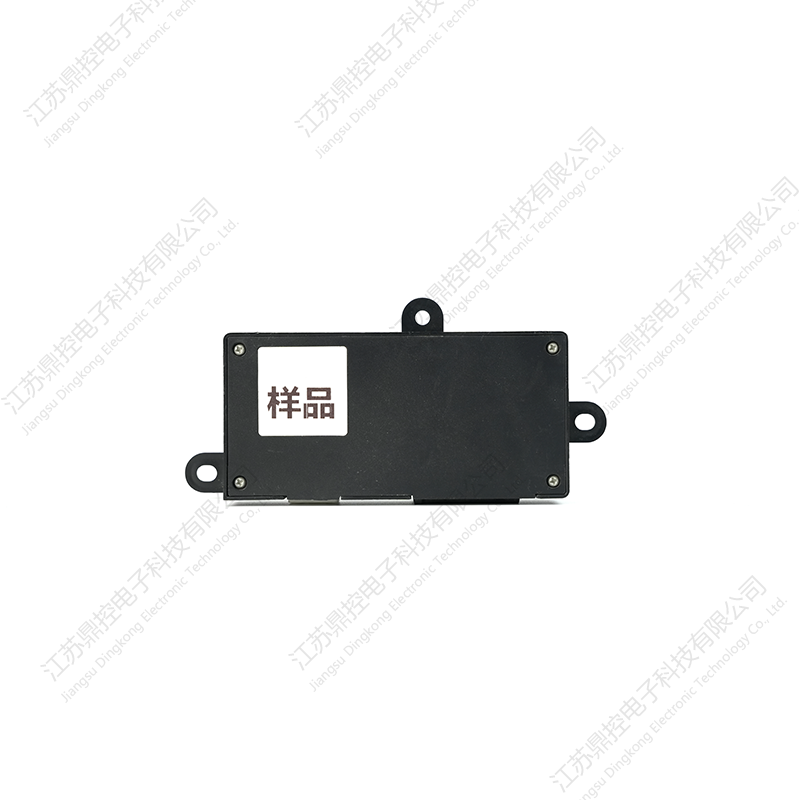 CYZ-A 12V/13V Vehicle Control Unit for Custom ElectronicsThis compact control unit supports 12V and 13V inputs and handles relay outputs, sensor inputs, and CAN or RS485 communication. It suits installations needing clean power and stable data lines, making it a practical choice for advanced vehicle wiring.View Product →
The table below gives practical starting points for common 12V circuits. Load calculations and run length still apply.
| Circuit | Recommended Gauge | Insulation | Notes |
|---|---|---|---|
| Signal and switch feeds | 18 AWG | GPT or GXL | Low current; keep away from heat |
| Interior lighting | 16 AWG | GPT | Standard PVC suits cabin duty |
| Power window and power seat motors | 14 AWG | GXL or SXL | High inrush current at startup |
| Engine bay accessories | 14 AWG | SXL | Heat and fluid exposure |
| Amplifier power feed, up to 50A | 8-10 AWG | SXL or welding cable | Fuse within 18 inches of battery |
| Battery and alternator cables | 2-4 AWG | SXL or marine cable | Short runs, sealed lugs |
These values assume copper conductors and run lengths under 15 feet. For longer runs, such as the full length of a van or SUV with auxiliary batteries or rear entertainment, step up one gauge and recalculate the voltage drop.
Most wiring failures share the same root causes:
For volume buyers, the procurement risk is more than a failed component. A harness that fails under warranty costs far more in labor than it saves in material. Wire with a marginal rating can pass initial testing and fail on the first hot summer. Ask every supplier for the insulation class and temperature rating in writing, verify the stranding and conductor material, and confirm the SAE marking on the jacket.
For a restoration, an MPV interior upgrade, or a set of aftermarket accessories, off-the-shelf wire is only part of the equation. Connectors, terminal selection, branch lengths, sleeving, and documentation matter just as much. A custom automotive wiring harness addresses all of these together: the correct gauge on every branch, the right insulation class for each environment, and a layout matched to the actual vehicle.
Jiangsu Dingkong Electronic Technology Co., Ltd. develops and produces custom wiring harnesses for platforms including Tesla, Mercedes-Benz, and BMW. The design process starts from the load table, not from a catalog. A power seat circuit gets a 14-gauge branch with cross-linked 125°C insulation. A CAN signal line gets a twisted pair with proper shielding. The same logic applies to control modules, switches, and touchscreens supplied by the company.
Harnesses and modules should be specified together. A control module designed for multiple relay outputs, dust and water protection, and CAN or RS485 communication needs a harness with matched connectors and conductor ratings. When both are designed as one system, failure modes caused by mismatched connectors, undersized pins, or ambiguous wire colors largely disappear.
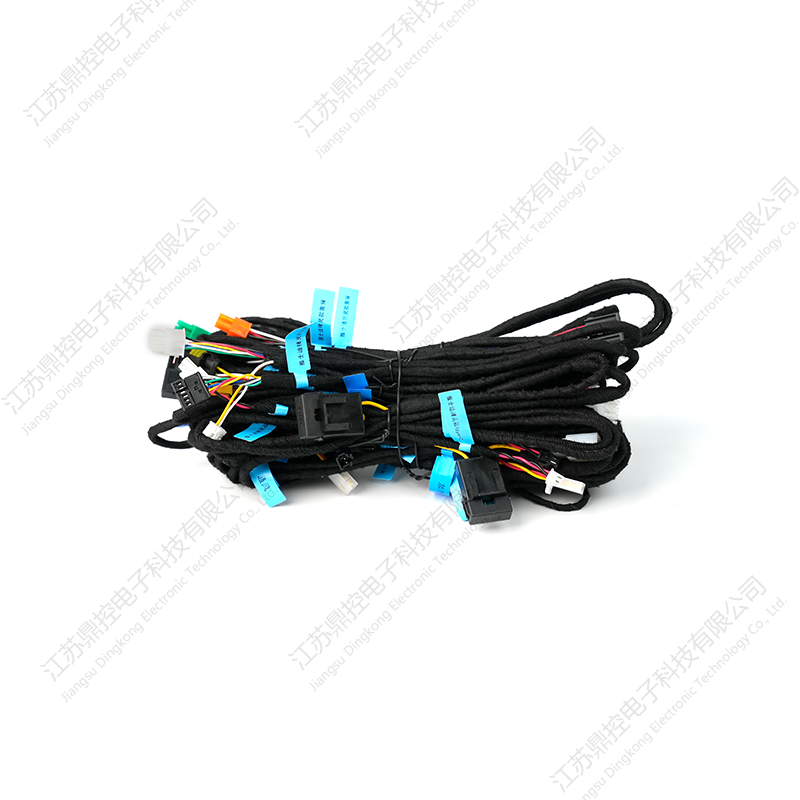 Custom Vehicle Electronic Wiring Harness for Tesla, Benz, BMWThis harness is built for Tesla, Mercedes-Benz, and BMW models with oxygen-free copper conductors, heat-resistant insulation, and IP67 protection. It supports currents up to 150A and offers plug-and-play connectors, ideal for OEM replacement or modifications.View Product →
Automotive wire is a specification, not a commodity. The gauge must match the load, the insulation must match the environment, and the voltage rating must match the system. When those three align, circuits run for the life of the vehicle. When they do not, failure is only a matter of time.
For anyone buying wire or harnesses in volume, the practical habit is to request documentation: insulation class, temperature rating, conductor stranding, and terminal compatibility. The price difference between a marginal wire and a correctly specified wire is small. The cost of replacing a burned harness is not. Suppliers that cover design, production, and sales under one roof reduce the risk of mismatched specifications, and that integration matters most for conversions and low-volume commercial builds.
1: Introduction – Enhancing Comfort and Convenience with Car Armrests The Importance of Comfort in Modern Driving In today’s automotive landscape,...
READ MOREI. IntroductionThe automotive industry is undergoing constant evolution, with a growing emphasis on vehicle maintenance and personalization. For car o...
READ MORE1. Introduction The Tesla Model 3 and Model Y have quickly become two of the most popular electric vehicles on the market. With their sleek designs, i...
READ MORE
Jiangsu Dingkong, No.1, Menlouxia, Changjing Town, Jiangyin City, Jiangsu Province, China
Copyright © 2024 Jiangsu Dingkong Electronic Technology Co., Ltd. All Rights
Reserved.
 Auto Aftermarket Accessories Manufacturers