

 English
 中文简体
中文简体1: Introduction – Enhancing Comfort and Convenience with Car Armrests The Importance of Comfort in Modern Driving In today’s automotive landscape,...
READ MOREApr 23, 2026
Content
MPV stands for Multi-Purpose Vehicle—a category of automobile engineered from the ground up to prioritize interior space, passenger capacity, and everyday practicality over driving dynamics or off-road capability. Where most vehicle segments make trade-offs between comfort and performance, the MPV deliberately places the cabin experience at the center of every design decision.
The term entered widespread use in the 1980s and 1990s as automakers in Europe and Asia developed a new class of vehicles that combined the passenger capacity of a minibus with the drivability and running costs of a conventional car. Chrysler's introduction of the Dodge Caravan in 1983 is widely credited as the vehicle that defined the modern MPV format in the North American market, while Japanese manufacturers refined the concept through the 1990s with models that emphasized interior flexibility and cabin height.
Today, MPVs—also referred to as people carriers, minivans, or Multi Utility Vehicles (MUVs) depending on the market—represent one of the most practical vehicle formats available. Their defining philosophy is straightforward: give every occupant the maximum possible space, comfort, and accessibility, regardless of where they sit. This principle shapes everything from the vehicle's exterior dimensions to its seat configuration, door design, and interior storage architecture.
An MPV is immediately recognizable by a set of structural and functional features that distinguish it from other vehicle types. Understanding these characteristics explains why the format continues to be the preferred choice for families, business fleets, and transport operators requiring consistent passenger comfort.
Unlike the sloped rooflines of sedans, SUVs, or crossovers—which sacrifice headroom in the pursuit of aerodynamic styling—MPVs adopt a tall, upright body profile. This architecture maximizes interior headroom across all seat rows, making it possible for adult passengers to sit comfortably in the second and third rows without the hunched posture common in lower-roofed vehicles. The flat floor architecture, enabled by the MPV's typically front-wheel-drive layout, further eliminates the central tunnel that reduces legroom and seat flexibility in many other vehicle formats.
Most MPVs accommodate between five and nine passengers across two or three rows of seats. What distinguishes MPV seating from that of other multi-seat vehicles is its configurability: individual seats can typically be folded, reclined, slid forward or backward, or in premium models, removed entirely. This system allows the same vehicle to function as a seven-seat family carrier on one day and a high-capacity cargo vehicle—with rear seats stowed flat—on the next. The versatility of the seating system is, in many respects, the core value proposition of the MPV format.
One of the most functionally significant features of a full-size MPV is the sliding side door. Unlike conventional hinged doors, which swing outward and require clear lateral space to open fully, sliding doors travel parallel to the vehicle body. This makes entry and exit possible even in tight parking bays, multi-storey car parks, and kerbside drop-off situations. For families with young children, the elimination of door swing also significantly reduces the risk of doors striking adjacent vehicles or pedestrians. Powered sliding doors, now standard on many mid-range and premium MPVs, add a further layer of convenience that has made this feature a strong selling point in the segment.
When rear seats are folded or removed, MPVs offer cargo volumes that rival many light commercial vehicles. Boot capacities with all seats in place typically range from 200 to 500 litres depending on the model; with the rear seats folded, load volumes of 1,000 to 1,400 litres are common. This capacity, combined with a low, flat loading floor accessible through a wide tailgate opening, makes MPVs practical for transporting large items that would not fit in a conventional car or SUV.
Unlike commercial vans, which use body-on-frame construction, most MPVs are built on a unibody platform—the same structural approach used in passenger cars. This results in lower overall vehicle weight, better NVH (noise, vibration, harshness) characteristics, and a more car-like driving experience. Front-wheel drive is the dominant drivetrain layout, enabling the flat floor architecture that maximizes interior space and contributing to the fuel efficiency that makes MPVs cost-effective over time.
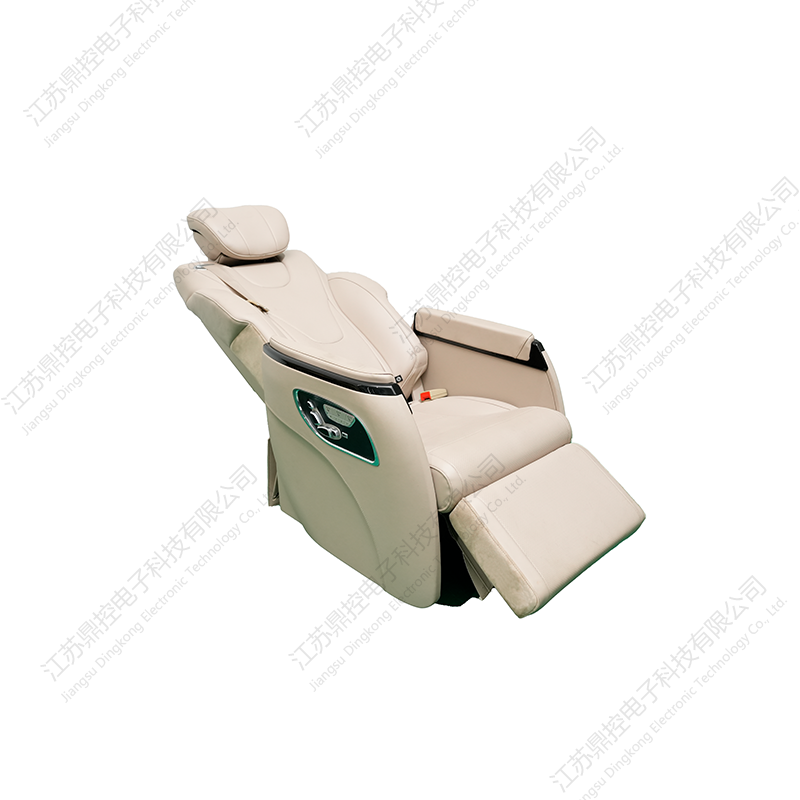
The MPV segment is not monolithic. Vehicles described as MPVs span a significant range of sizes, seating capacities, and price points, and understanding the distinctions between sub-categories helps clarify which format suits a given set of requirements.
| Category | Typical Length | Seating Capacity | Sliding Doors | Typical Use Case |
|---|---|---|---|---|
| Mini MPV | Under 4.0m | 5 seats | Often absent | Urban families, compact parking, city commuting |
| Compact MPV | 4.0–4.5m | 5–7 seats | Sometimes present | Mid-size families, school runs, short road trips |
| Large MPV | 4.5m and above | 7–9 seats | Standard | Large families, premium business transport, airport transfers |
Large MPVs—exemplified by models such as the Toyota Alphard, Mercedes-Benz V-Class, and Buick GL8—occupy a premium tier of the segment where interior space, ride quality, and cabin refinement are prioritized at a level that competes directly with executive saloons and luxury SUVs. These vehicles are as likely to be found in corporate fleet use or chauffeur service as in private family ownership, reflecting the breadth of the format's appeal.
The rise of the SUV and crossover segments over the past two decades has frequently been framed as occurring at the expense of the MPV. While it is true that many families have migrated from people carriers to SUVs, the two formats serve meaningfully different priorities—and understanding those differences makes the choice between them clearer.
| Criteria | MPV | SUV |
|---|---|---|
| Primary design priority | Passenger space and accessibility | Versatility and styling |
| Seating capacity | Up to 9 seats | Usually up to 7 seats |
| Interior headroom | Excellent across all rows | Reduced in 2nd/3rd row |
| Sliding doors | Common (full-size models) | Absent |
| Off-road capability | Minimal | Moderate to high |
| Ground clearance | Moderate | Higher |
| Fuel efficiency | Generally better | Generally lower |
| Driving position | Car-like, lower | Elevated, commanding |
The SUV's appeal is largely aesthetic and aspirational—a commanding driving position, rugged exterior design, and the perception of capability. The MPV's appeal is unambiguously functional: more seats, more headroom, easier access, and better use of the available cabin volume. Neither format is objectively superior; they reflect different hierarchies of what matters most to a buyer.
For buyers who regularly carry five or more passengers, value ease of access for children or elderly passengers, or require genuine flexibility between passenger and cargo configurations, the MPV consistently outperforms the SUV on purely practical grounds. For buyers who prioritize driving experience, off-road versatility, or a more dynamic exterior profile, the SUV is the more natural fit.
The MPV's broad design brief means it serves a more diverse set of users than its family-car reputation might suggest. The following profiles represent the primary contexts in which an MPV consistently delivers value that other vehicle formats cannot match.
The most natural fit for an MPV is a household with three or more children, or one that regularly travels with extended family members. The ability to seat seven or more passengers in genuine comfort—with adequate headroom, legroom, and luggage space—while maintaining a single vehicle is a practical and economic advantage that no SUV or sedan can replicate at the same price point.
Large MPVs have become the vehicle of choice for premium executive transport, corporate chauffeur services, and business fleet operations. Models such as the Toyota Alphard and Mercedes-Benz V-Class offer rear cabin environments—featuring reclining captain's chairs, individual climate zones, privacy glass, and entertainment systems—that rival the interiors of luxury saloons, while accommodating four to six passengers in a single vehicle. For businesses that regularly transport clients, senior executives, or visiting partners, a well-equipped MPV projects professionalism and delivers a hospitality-grade passenger experience.
The combination of high seating capacity, large boot space for luggage, and sliding doors that allow rapid passenger loading makes MPVs the dominant format in airport transfer and private hire operations globally. A single large MPV can replace two or more conventional taxis for group transfers, reducing operational costs while improving the passenger experience.
The MPV's tall cabin, wide sliding door aperture, and flat floor make it one of the more adaptable platforms for wheelchair access conversions and mobility vehicle modifications. The absence of a high sill and the generous door opening width significantly reduce the complexity of ramp or lift integration compared to SUVs or vans.
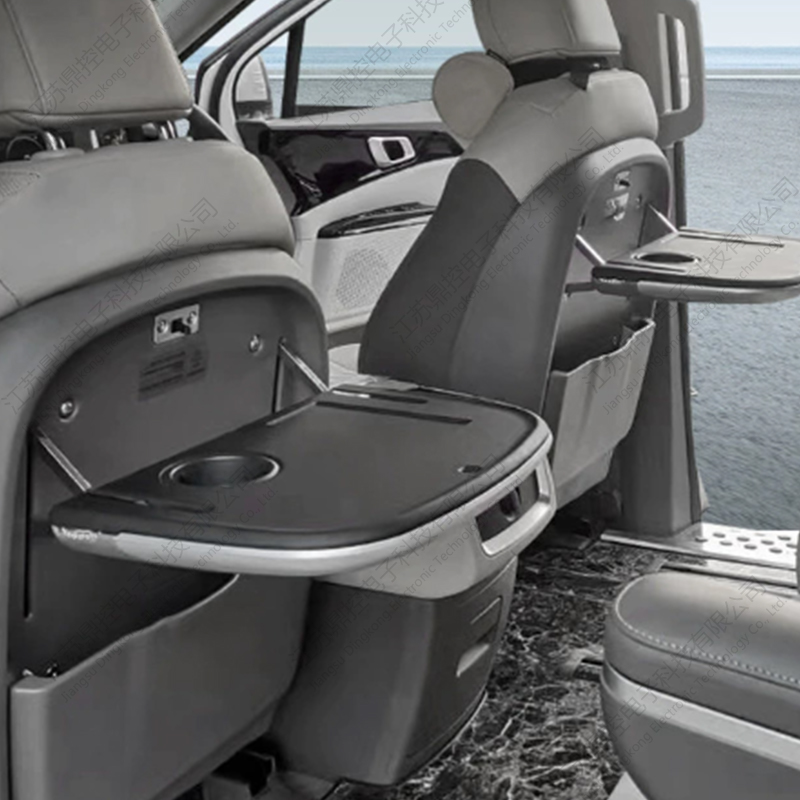
Owning an MPV is, in many respects, owning a platform with significant latent potential. The spacious, modular interior that makes MPVs practical also makes them uniquely receptive to targeted upgrades that enhance comfort, functionality, and the overall quality of the cabin experience—often without structural modification and at a fraction of the cost of a vehicle replacement.
For family users, the priorities typically center on comfort and convenience: seat ventilation and heating upgrades for long journeys, enhanced storage systems that organize the cabin for daily use, and ambient lighting improvements that make the interior feel more premium without requiring a full refit. Privacy curtains and partitioned compartments are practical additions for buyers who use their MPV for both family travel and occasional business transport.
For premium and business-focused MPV owners, the upgrade potential extends significantly further. Power swivel seat systems—which allow second-row captain's chairs to rotate 90° to 360° electrically—transform the rear cabin into a lounge-like environment suitable for executive meetings, client entertainment, or relaxed long-distance travel. These systems, engineered for models including the Toyota Alphard, Mercedes-Benz V-Class, and Buick GL8, operate near-silently and incorporate automatic safety stops if resistance is detected during rotation. Our MPV power swivel seats are built on high-strength magnesium-aluminum alloy frames with zero-gravity suspension foam, delivering the structural integrity and comfort depth that premium MPV interiors demand.
The control interface for these systems matters as much as the hardware itself. Modern power seat switches combine physical controls with touchscreen interfaces, backlit metal knobs, and multi-directional adjustment logic—enabling precise, intuitive control over backrest angle, leg support extension, headrest position, and integrated heating or ventilation functions from a single panel.
Beyond seating, a comprehensive approach to MPV interior enhancement covers the full spectrum of touchpoints that define the cabin experience: armrest assemblies, LED ambient lighting systems, intelligent on-board control panels, electric door lock upgrades, and modular storage solutions. Exploring our full range of MPV car interior replacement parts provides a structured starting point for identifying which upgrades deliver the highest return for a given vehicle and use case.
The MPV's core strength has always been its interior. Investing in that interior—with components engineered specifically for the format and the models it encompasses—is the most direct way to extend the vehicle's useful life, improve daily satisfaction, and ensure that its considerable passenger-carrying potential is matched by an equally refined on-board experience.
1: Introduction – Enhancing Comfort and Convenience with Car Armrests The Importance of Comfort in Modern Driving In today’s automotive landscape,...
READ MOREI. IntroductionThe automotive industry is undergoing constant evolution, with a growing emphasis on vehicle maintenance and personalization. For car o...
READ MORE1. Introduction The Tesla Model 3 and Model Y have quickly become two of the most popular electric vehicles on the market. With their sleek designs, i...
READ MORE
Jiangsu Dingkong, No.1, Menlouxia, Changjing Town, Jiangyin City, Jiangsu Province, China
Copyright © 2024 Jiangsu Dingkong Electronic Technology Co., Ltd. All Rights
Reserved.
 Auto Aftermarket Accessories Manufacturers