

 English
 中文简体
中文简体1: Introduction – Enhancing Comfort and Convenience with Car Armrests The Importance of Comfort in Modern Driving In today’s automotive landscape,...
READ MOREFeb 28, 2026
Car power seats — also called car electric seats — use small electric motors to adjust seating position at the touch of a button, replacing the manual levers and tracks found in base-trim vehicles. They are one of the most driver-satisfaction-linked features in modern vehicles, with studies showing that correct seating position reduces driver fatigue and improves reaction time on long journeys. Whether you are buying a new vehicle, diagnosing a seat that has stopped moving, or considering an aftermarket upgrade, this guide covers how power seats work, what the different configurations offer, and what to watch for in terms of maintenance and repair.
Content
A car electric seat system consists of one or more DC motors — typically rated at 12V and 5 to 35 amps depending on the adjustment axis — connected to a series of gearboxes, drive cables, or lead screws that move the seat track or adjust the seatback angle. Each adjustment direction (forward/back, up/down, tilt, recline) is controlled by a separate motor or a shared motor with a transmission selector.
The control switches on the side of the seat or door panel send low-current signals to a seat control module (in more modern vehicles) or directly energise the motors through relay circuits (in older systems). When the switch is pressed, current flows through the motor in a polarity determined by switch direction — reversing polarity reverses motor direction, which is how the seat moves both forward and back using the same motor.
Higher-end systems integrate memory seat functionality, where the control module stores position data from Hall-effect sensors or potentiometers on each motor axis. When a stored position is recalled, the module drives each motor until the sensor reading matches the saved value, then cuts power automatically.
The number of "ways" a power seat adjusts refers to the total number of independent movement directions available. More adjustment axes generally mean more precise ergonomic fit for a wider range of body types.
| Configuration | Adjustment Axes Included | Typical Vehicle Segment |
|---|---|---|
| 4-way | Forward/back, recline | Entry-level / compact cars |
| 6-way | Forward/back, up/down, recline | Mid-range sedans and SUVs |
| 8-way | 6-way + front/rear height tilt | Premium sedans, mid-to-upper SUVs |
| 10-way | 8-way + lumbar support (in/out) | Luxury vehicles, full-size trucks |
| 12-way+ | 10-way + lumbar height, side bolster | Ultra-luxury / executive seating |
For most drivers, an 8-way seat with power lumbar support covers the ergonomic adjustments that matter most for daily comfort and long-distance driving. The step from 6-way to 8-way — adding independent front and rear seat cushion height tilt — makes a meaningful difference for shorter drivers who need a steeper thigh support angle and for taller drivers who need to flatten the cushion to maintain legroom.
Memory seat systems are a logical extension of power seat hardware, adding position sensing and storage to allow multiple drivers to recall their preferred settings instantly. They are standard or optional on most vehicles above the entry-level segment and are particularly valuable in households where a car is shared between drivers of significantly different builds.
Most memory seat systems store more than just seat position. A typical package includes:
Many memory seat systems include an automatic easy-entry function that moves the seat rearward and tilts the steering column up when the ignition is turned off, making it easier to exit the vehicle. When the stored profile is recalled on re-entry, the seat and column return to the saved driving position. This feature is particularly useful in low-roofline vehicles like coupes and sport sedans where ingress and egress clearances are tighter.
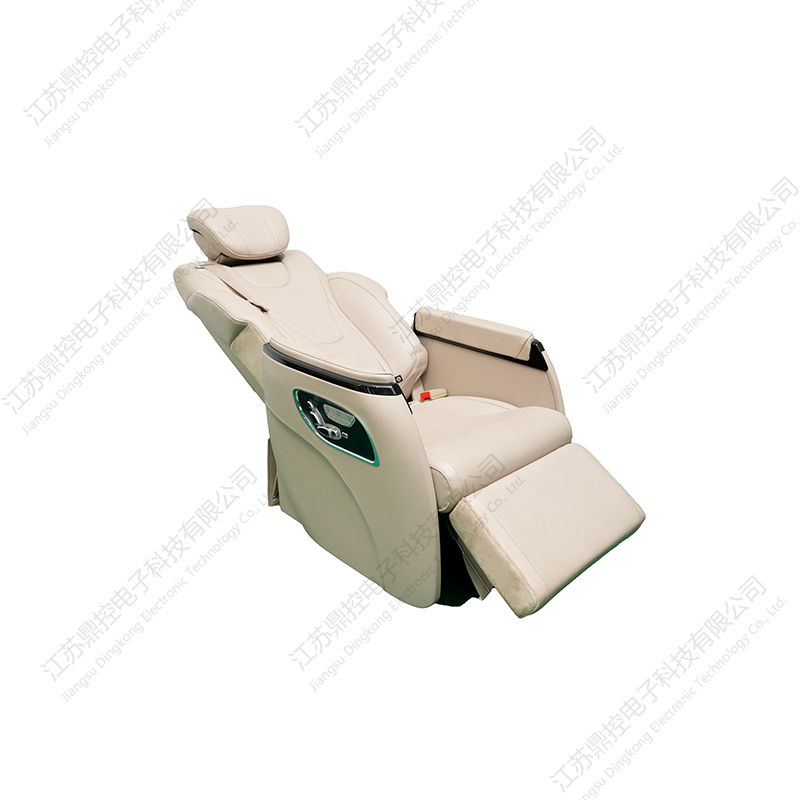
Modern car electric seats often combine positional adjustment with additional comfort and safety technologies that are electrically driven or enabled by the seat's power infrastructure.
Heated seats use resistive heating elements embedded in the seat cushion and backrest foam, typically consuming 40 to 120 watts per seat at full power. Ventilated seats add small fans that draw air through perforations in the seat cover to reduce surface temperature and moisture accumulation — particularly effective in leather-trimmed seats that can become uncomfortable in warm climates. Both functions are controlled through the vehicle's HVAC or dedicated seat control switches and are entirely separate from the positional adjustment motors.
Found in premium and luxury vehicles, massage seats use a series of small inflatable air bladders or rotating cam mechanisms within the seat cushion and backrest. Bladders are cycled through inflation and deflation sequences by a compressor and valve system to simulate massage movements. Mercedes-Benz, BMW, Volvo, and Genesis have offered multi-programme massage seats as standard or optional equipment on their upper-trim models.
Separate from motorised lumbar adjustment, pneumatic lumbar systems use air bladder inflation to provide adjustable lower back support without mechanical complexity. Inflatable side bolsters — found in sport-oriented seats — tighten laterally around the driver during cornering, improving body support and reducing perceived roll. Some performance vehicles link bolster inflation to steering angle and lateral g-force input from the vehicle's stability control system.
Electric rear seat folding systems — common in larger SUVs and minivans — use motors to fold the rear seatbacks flat at the press of a button in the cargo area or via a dashboard switch. This eliminates the need to physically push down a heavy seat and is especially useful when loading large or awkward cargo. Ford, Toyota, and Honda have offered powered rear seat folding on their full-size and mid-size SUV models as a significant practical advantage over manual alternatives.
Car electric seats are generally reliable, but they operate in a harsh environment — subject to vibration, moisture, and the physical loads of regular use. Most failures fall into a small number of identifiable categories.
The most common power seat fault. Start diagnosis by checking the dedicated fuse for the seat circuit — seat motors draw high current and blown fuses are a frequent cause of complete seat failure. If the fuse is intact, test for voltage at the switch and at the motor connector with a multimeter. No voltage at the switch indicates a wiring or relay issue; voltage at the switch but not the motor indicates a broken wire or failed connector in the seat track harness, which is frequently chafed by seat movement over time.
If the seat moves forward but not back (or vice versa), the motor itself is usually functional. The most likely causes are a faulty switch (one side of the rocker switch contacts fails), a broken return wire in the harness, or a mechanical obstruction at the end of travel that has tripped a thermal protection cutout in the motor. Disconnecting and reconnecting the motor connector sometimes resets the thermal cutout temporarily, confirming that diagnosis.
Memory seat inaccuracy is usually caused by a failed position sensor (potentiometer or Hall-effect sensor) on one of the motor axes. When the sensor reading is implausible or missing, the seat control module cannot accurately track position. On vehicles with OBD-accessible seat control modules, fault codes identifying the specific failed sensor axis are often stored and retrievable with a compatible scan tool.
Mechanical noise during seat movement typically indicates worn gears in the motor gearbox, debris in the seat track, or a stripped drive cable. Track debris (crumbs, coins, or small objects) is the most common cause and is easily resolved by vacuuming and cleaning the track. Gearbox wear requires motor replacement, which on most vehicles is a straightforward process involving seat track disassembly and motor unbolting.
When a power seat motor or switch fails, the decision between repair and replacement depends on the vehicle's age, the cost of the replacement part, and whether the failure is electrical or mechanical.
For vehicles under warranty, any power seat fault should be reported to the dealer immediately, as seat electrical components are covered under the bumper-to-bumper warranty period in most markets, typically 3 years or 36,000 miles in the United States.
Retrofitting power seats into a vehicle that came with manual seats is technically possible but considerably more complex than swapping a failed seat for a working one. The feasibility depends heavily on the specific vehicle platform.
Many vehicle platforms use the same seat track mounting points for both manual and powered seats. In these cases, sourcing a complete powered seat assembly (including motors, switches, and wiring harness) from a higher-trim version of the same model and installing it in a lower-trim vehicle is the most straightforward upgrade path. The main additional requirements are routing power from a fused circuit in the fuse box, and installing the seat switch panel in the door card or seat side. This type of OEM retrofit is well-documented for popular models including the Toyota Camry, Ford F-150, Honda Accord, and many others, with detailed guides available in enthusiast communities.
Universal-fit powered seat track kits are available for vehicles where OEM swaps are not practical — including older classics, kit cars, and track vehicles. These kits replace the manual seat runners with motorised tracks and include a simple switch and wiring harness. Most offer forward/back and height adjustment as a minimum. Brands including Corbeau and Recaro offer powered track options compatible with their sport seat ranges. Costs for quality universal power track kits range from $300 to $700 for a pair, not including installation labour.
Aftermarket power seat installations do not automatically include memory functionality, which requires a seat control module and position sensors that are specific to the OEM system. Heated seat elements can be added independently as a separate aftermarket kit. Additionally, any seat modification that alters the mounting geometry or structural integrity of the seat track can affect airbag sensor calibration and side-impact safety performance — always verify that modifications do not interfere with SRS (supplemental restraint system) components.
On vehicles equipped with side-impact airbags integrated into the seat (seat-mounted side airbags), the seat structure contains the airbag inflator and the deployment path. Any modification to seat foam, covers, or structural components must be performed by a qualified technician who understands the airbag deployment requirements. Using aftermarket seat covers that cover the airbag deployment seam — a very common modification — can significantly impede airbag deployment in a side-impact collision and is strongly discouraged by vehicle manufacturers and safety regulators.
Power seat wiring harnesses also pass near or through the seat structure. During repairs or modifications, care must be taken not to damage the squib (airbag igniter) wiring, which is typically yellow-sheathed or yellow-connectorised as a universal colour-coding convention. Accidental triggering of a seat-mounted airbag during repairs can cause serious injury and costs over $1,000 to replace even on mid-range vehicles.
1: Introduction – Enhancing Comfort and Convenience with Car Armrests The Importance of Comfort in Modern Driving In today’s automotive landscape,...
READ MOREI. IntroductionThe automotive industry is undergoing constant evolution, with a growing emphasis on vehicle maintenance and personalization. For car o...
READ MORE1. Introduction The Tesla Model 3 and Model Y have quickly become two of the most popular electric vehicles on the market. With their sleek designs, i...
READ MORE
Jiangsu Dingkong, No.1, Menlouxia, Changjing Town, Jiangyin City, Jiangsu Province, China
Copyright © 2024 Jiangsu Dingkong Electronic Technology Co., Ltd. All Rights
Reserved.
 Auto Aftermarket Accessories Manufacturers